








1. Introduction
Sony Group Corporation, commonly known as Sony, is a Japanese multinational mass media and conglomerate headquartered in Minato-ku, Tokyo, Japan. As a globally renowned multinational company, it continues to navigate an increasingly complex and dynamic market landscape in 2024/2025. From its post-war origins to its current position as a worldwide leader in technology, entertainment and innovation, Sony’s development trajectory is strongly associated with diversified product range, solid core brand equity, and strategic focus on creativity [1]. The objective of this paper is to evaluate Sony’s current competitive position based on the three brand pillars including quality signal, global myth, and social responsibility, a classic framework outlined in the Harvard Business Review article “How Global Brands Compete” [2]. Furthermore, it will give recommendations on how Sony should target “anti-globalization” strategically and effectively manage its national identity, which are expected to have significance for other organizations as well.
2. Analysis
2.1. How quality signal differentiates competitiveness
From radio, Walkman, portable CD player, OLED television, PlayStation series, to professional broadcasting system, robotics, semiconductors, spectrum cell analyzer, and 4K surgical endoscopy system, Sony has been standing at the forefront of the times, providing the world with high quality, technology-driven, and innovative products that are the cornerstone of its global reputation [1, 3]. This is built on the corporation’s significant, continuous investments in Research and Development (R&D), which allow them to consistently deliver advanced concepts and superior product quality, helping them maintain and iterate a valuable brand [4]. As in the complex and ever-changing global marketplace, product quality has become difficult for consumers to identify directly, it is often necessary for brands to draw on “quality signals” to communicate their value [5]. A powerful global brand like Sony, could create its consistent product quality over time and nurture its quality signal, which in turn influences consumer perceptions and elevates perceived quality [6].
According to Holt, Quelch and Taylor, in the dynamic global marketplace, global brands may leverage their stature as a strong quality signal. Consumers from every corner of the world believe that fierce competition among transnational companies drives continuous innovation and quality improvements, creating a rooted impression that global brands provide excellence in products and guarantees [2]. In the context of global branding, higher perceived quality is a significant facilitator of greater brand equity [4]. Global brands could command premium prices and build up prominent competitive advantages over local alternatives based on this perception of higher quality [2].
Sony’s persistent care of consumer needs since its founding has enabled the cultivation of a valuable brand that is recognized globally, and such a perception of quality is consistently enhanced through the dedication to its core businesses including consumer electronics, game consoles, music, and motion pictures [7]. As a highly renowned global brand from Japan founded in 1946, Sony can maintain its reputation strategically by cutting-edge technology, innovative digital concepts, and superior product quality, having kept releasing countless “Japan’s first” and “world’s first” [1, 8]. An inspiring example is the launch of the PlayStation series that stimulated extensive R&D investment and gained a significant competitive advantage persisting to this day in the interactive entertainment industry. This business line drives innovation beyond gaming and further consolidates the group’s quality signal [7, 9].
According to Sony’s Corporate Report, in 2024, PlayStation is still in a leading position of the global gaming console market with PS5 global sales of 61.7 million cumulative units, 116 million PS4 and PS5 monthly active users, and multiple blockbuster exclusives. Further, its competitive edge is reinforced by some key factors such as content excellence, hardware innovation, new technology integration, and Business Model Innovations like enrichment of subscription services and cross-platform ecosystem [7]. Additionally, in dynamic scenario, Sony has continued to strengthen strategic partnerships for PlayStation and expand the entertainment ecosystem around it, solidifying its brand value and market position as a premier gaming platform [7].
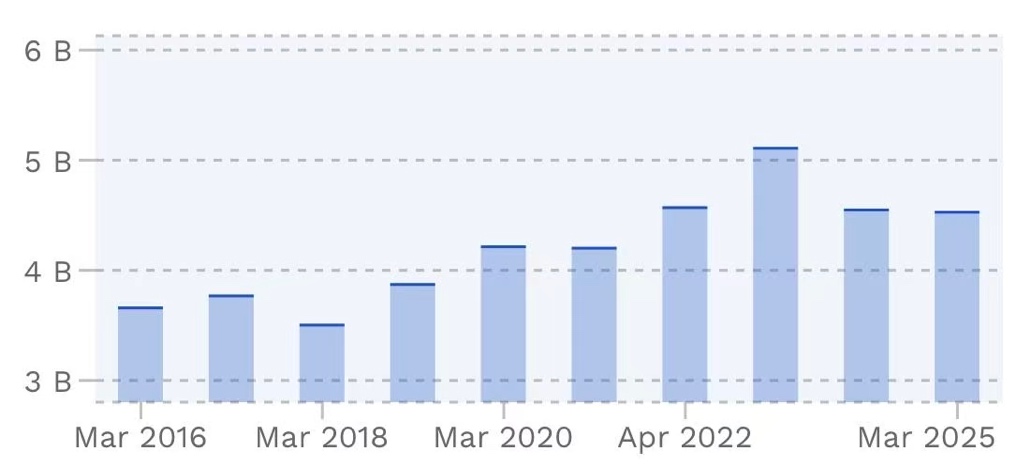
However, it is challenging for a global brand to maintain a consistent quality signal across a wide and diversified product portfolio. Given the ever-changing nature of product markets, constant R&D investment is required for Sony to sustain its innovation capability and remain competitive [10]. The interaction effects between R&D and marketing capacities, which would have collective impact on brand equity and product market performance, is vital for establishing brand competitiveness [11]. Moreover, Hanaysha and Hilman suggest that both brand equity and its dimensions, including brand awareness, brand image, brand loyalty, and brand leadership, will significantly benefit from the positive effect posed by product innovation [12]. According to the Finbox data (Figure 1), Sony’s R&D expenditure has fluctuated with periodic strategic adjustments over the years, demonstrating its continuous and regular efforts to lead innovation and adaptation to market demands [13]. This consistent commitment to advancement in technology and excellence in products is important for Sony to strengthen its quality signal, enabling it to adapt proactively to market changes and maintain competitive advantage in the global marketplace.
2.2. Global myth in shaping brand identity
Beyond perceivable product quality, like many other global brands that have extraordinary influence, Sony knows the significance of leveraging “global mythologies” to build deep connections with consumers and foster a distinctive brand identity [6]. In general, these myths are culturally, globally agreed brand narratives that resonate with essential consumer values, contributing significantly to the formation of emotional bonds and sense of belonging [14]. More precisely, global myth is a critical feature that shapes brand identity through allowing consumers to link global brands with symbolic representations of cultural ideals and aspirations, thereby cultivating a sense of imagined global belonging [2, 6, 15]. With the global myths created by transnational companies, individuals can use these brands as an instrument for constructing personal global identity that connects them with a broader international community [2]. Over time, the phenomenon of global myths has experienced significant transformation. The narratives have been becoming increasingly diverse and inclusive of influences from a wider range of dominant global brands across different regions [2, 6]. The domain of products has also extended to involve a wider array of industries including mass communication, entertainment, and information technology, which reflect global brands’ wider spectrum of aspirations and cultural touchpoints with consumers [2].
Furthermore, Internet and social media nowadays have played a pivotal role in empowering global brands with augmented capacities to manage and promote their global myths, enabling them to more efficiently position and market themselves to global audience [16]. Taking full advantage of the digital platforms, global brands can spread their discourse and ideals more broadly, and in turn make greater impact on how worldwide consumers perceive and interact with their products or services [17]. This widespread reach reinforces the evolving global myth that contributes to the brand’s value and identity among consumers.
As a global brand renowned for digital and technological innovation, Sony solidly anchors its global myth in the capability to foster cultural awareness through strategic cultural symbolism and cross-media storytelling. Its game segment represented by the PlayStation series exemplifies such a feature, with the brand transcending hardware and software sales to become a world-class cultural icon [9]. As reported in The Development of PS in the Current Game Market, revolving around PlayStation, Sony accounted for approximately 46% of the console game market share from hardware, software, and service sales, far exceeding other major companies including Nintendo’s 29% and Microsoft’s 25% [9].
Based on this strong foundation in popular culture, Sony has successfully created and disseminated a powerful global myth focusing on its clearly defined corporate identity that is being “A Creative Entertainment Company with a Solid Foundation of Technology” [7]. This myth is much more beyond a marketing slogan, but at the core of its purpose and model of value creation. It has become widespread through the corporation’s consistent narrative that merges technological pioneering with emotional storytelling, being centered on “filling the world with emotion, through the power of creativity and technology” [7].
Further, this myth achieves global dissemination via several key channels, including high-profile product launches and presence at popular events like CES showcasing technological strength, strategic acquisitions and investments in iconic entertainment properties like Columbia Records, EMI Music, and Crunchyroll turning Sony into global cultural mainstream, and long-sighted communication strategies like integrated reporting and sustainability visioning reinforcing Sony’s commitment to delivering infinite emotion (Kando in Japanese) [7, 18]. In addition, Sony has implemented the crucial “Global Localization” strategy to make sure its global myth is adaptable to local markets through regional headquarters and inclusive talent policy, ensuring the consumers feel both universal premium and personal relevance from this brand [18].
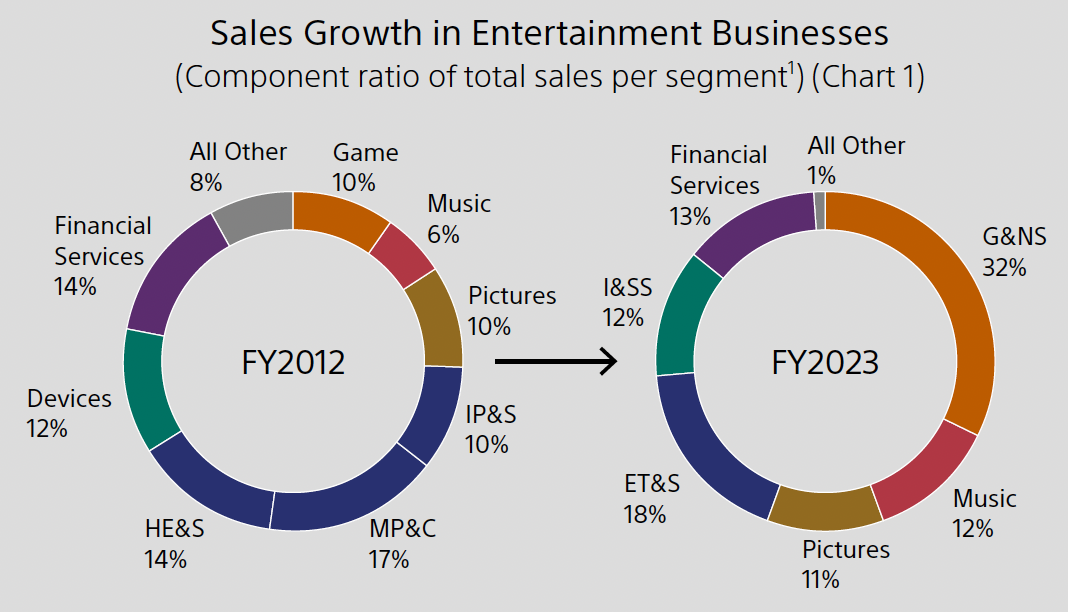
Sony’s current competitive edge and market position in 2024/2025 are profoundly credited to the successful presentation and evolution of its global myth. The financial and strategic data retrieved from its 2024 Corporate Report give evidence to this. For example, the corporation’s strategic shift from merely delivering Kando through products to benefiting its creation is a distinct evolution of its global myth [7]. This is reflected in the massive investment data over the past six years such as approximately 1.5 trillion yen in content IP including the acquisition of music catalogs and other costs, and 1.5 trillion yen in CMOS image sensors which are valued not just as components but as key devices that “support the creative process for many people, from movie creators to smartphone users worldwide” [7]. The shift in strategic investment has resulted in a transformed business portfolio within which entertainment businesses, consisting of games, music, and pictures, constituted 55% of Sony’s total sales in FY2023 increased from 26% in FY2012, demonstrating a significant pivot to creativity-driven model (Figure 2) [7]. Moreover, its emphasis on the development of real-time creation technology like Unreal Engine for game production and the establishment of advanced visualization facility like Torchlight for pre-production vision simulation positions the corporation at the hub location of technology and entertainment, setting up new industry standards and enhancing its global myth as an enabler of creators [7, 19].
Looking into the future, Sony’s positioning is strengthened by leveraging its myth to maximize the brand equity across its entire ecosystem. Embodied in its long-term “Creative Entertainment Vision”, the myth generates a strategic framework for unique synergies that cannot be easily duplicated by competitors [7]. At the financial level, Sony’s 5th Mid-Range Plan (FY2024-FY2026) themed “Beyond the Boundaries: Maximize Synergies across the Group” sets forth a goal of 10% or more average annual growth in operating income that is predicated on its integrated, global myth-driven approach with profit increase primarily driven by Game & Network Services (G&NS) and Imaging & Sensing Solutions (I&SS) segments [7]. While historic analyses identified risks such as redundant product lines and over-reliance on performance management, Sony’s 2024 strategy is transformed to be more focused, drawing on its solid global myth to navigate the competition by standing out as a holistic, technology-powered harbor for diverse creators and fans [7, 18, 20].
2.3. Social responsibility as a sustainable characteristic
Corporate Social Responsibility (CSR) has emerged as an essential element in building strong global brands and strengthening competitiveness [21]. In today’s business landscape, beyond profit generation, consumers and stakeholders increasingly expect firms to contribute to societal well-being, and they closely monitor CSR initiatives [6]. Sony, as a powerful global brand, has demonstrated their clear commitment to CSR, which is recognized for its ethical and sustainable practices [22, 23].
Sony’s CSR practices involve various areas, reflecting its integrated approach to social responsibility. On the frontline of sustainability, the group works proactively to balance its efforts to enhance corporate value and contribute to building a sustainable society through implementing reasonable innovation and business strategies [24].
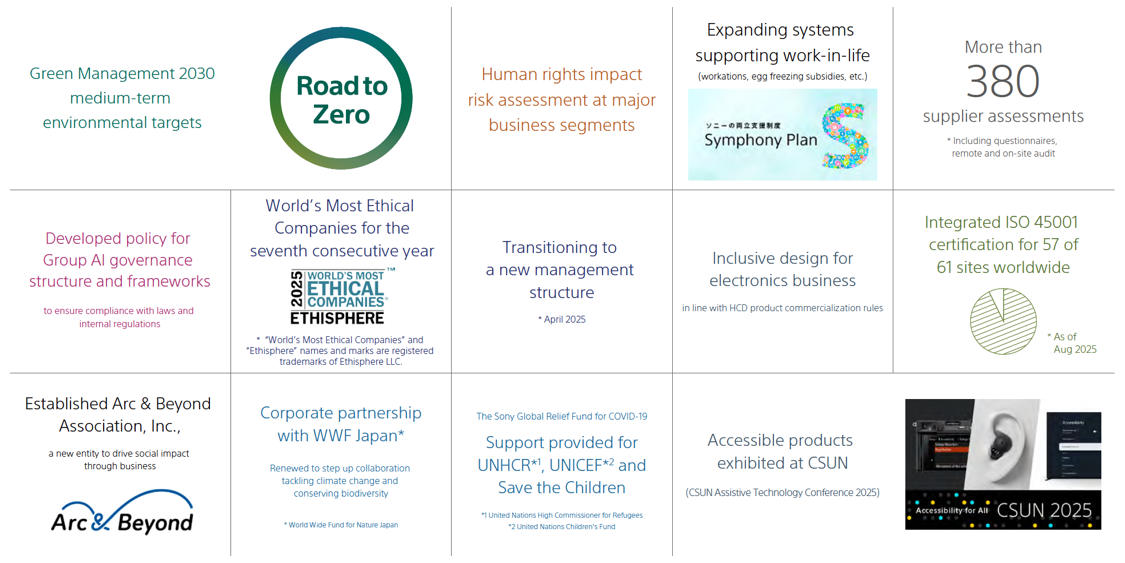
According to Sony’s Sustainability Report 2025, the group regards its social responsibility as integral to its corporate purpose of filling the world with emotion through creativity and technology. First, Sony incorporates sustainability in its core business strategy that is directed by a systematic framework consisting of its purpose & values, group Code of Conduct, and basic policy for sustainability initiatives. Second, its methodology is clearly structured around three major topics that include diversity, respect for human rights, and response to climate change. These priorities are practiced across all corporate business segments and global operations, ensuring social and environmental considerations are consistently weaved into product development, supply chain management, and stakeholder engagement [23]. Moreover, Sony has made practical and feasible guidelines to lead actions. For instance, its commitment to human rights is demonstrated through the specific Human Rights Policy and continuous collaboration with various multi-stakeholder efforts for the purpose of participating in the development of due diligence process and mitigating supply chain-related human rights risks [23]. Similarly, Sony’s environmental plan “Road to Zero” has set clear goals for future sustainability endeavors, including a value chain-wide net-zero environmental footprint by 2040 with attainable medium-term targets such as 100% renewable electricity use at own business sites by 2030, and reducing Greenhouse Gas emissions in Scope 3 (products, supply chains, and logistics) by 45% compared with fiscal ended March 31, 2019 by 2035 [23].
Sony’s strategic focus on CSR has elevated its competitive advantage and market positioning by improved brand trust, innovation capacity, and long-term resilience. As global brands become increasingly reviewed on their social responsibility during these two decades, Sony proactively aligns its policies and practices with consumer expectations that transnational companies are pivots in addressing societal concerns [2]. Some external recognitions endorse Sony’s leading role in corporate integrity and sustainability, such as six-year consistent AAA ranking from MSCI ESG Ratings and “World’s Most Ethical Companies” awarded for seven consecutive years by Ethisphere Institute. Further, Sony emphasizes investment in diversity, which is evidenced by its aim to increase the percentage of women and non-Japanese executives at Sony Japan to more than 30% each by 2030 [23]. Such efforts support the cultivation of an innovative and inclusive culture that would directly contribute to the group-wide creative and technological production. Additionally, Sony’s active engagement in multi-stakeholder frameworks and partnerships with organizations or initiatives like the Responsible Business Alliance (RBA) and RE100 (a global renewable electricity initiative) consolidate its reputation as a responsible industry leader [23]. These sustainability actions, as detailed in Figure 3, not only mitigate risks but open new avenues as reflected in the development of inclusive products like the Access™ controller for PlayStation 5, which effectively addresses societal needs and expands consumer reach [23]. Overall, through its well-integrated social responsibility framework, Sony not only fulfills its responsibilities as an extraordinary transnational company but also drives sustainability and competitiveness growth in the evolving global market, transforming brand reputation into brand equity through ethical practices [21].
As summarized in Table 1, the three pillars that drive Sony’s global competitiveness are interrelated. Continuous innovation helps to build a strong quality signal, technology and creativity unite into a global myth with powerful brand identity, and the corporate social responsibility further reinforces trust and long-term resilience.
|
Strategic Dimension |
Core Focus |
Key Practices & Evidence |
Competitive Impact |
Supporting References |
|
Quality Signal |
Technological innovation and product excellence |
Continuous R&D investment; PlayStation-driven innovation; consistent global product quality |
Strengthens brand equity and price premium through perceived superiority |
[1, 7, 11] |
|
Global Myth |
Emotional storytelling and creative identity |
Global slogan “Filling the world with emotion”; integration of technology and entertainment; cross-cultural storytelling; local adaptation through “Global Localization” |
Builds emotional attachment and brand loyalty; differentiates Sony as a global cultural icon |
[2, 7, 9] |
|
Social Responsibility |
Sustainability, ethics, and inclusion |
“Road to Zero” environmental goals by 2040; diversity targets (> 30% women and non-Japanese executives by 2030); AAA MSCI ESG ranking |
Enhances corporate trust, stakeholder value, and long-term resilience |
[21-23] |
3. Recommendations
3.1. Strategies for responding to anti-globalization
The rise of anti-global sentiments imposes a significant challenge for multinational companies like Sony. Generally, these sentiments result from community concerns about the erosion of local cultures, economic exploitation, and perceived lack of local contribution [25]. Effectively targeting this issue in marketplace requires strategic adjustments to respond to local concerns as well as maintain global brand integrity.
First, it is recommended to highlight local R&D and manufacturing. While keeping its global presence, Sony can strategically elevate the role of local R&D centers and manufacturing locations. Through investing and creating jobs regionally, Sony could directly address the controversy that multinational companies mainly extract resources with seldom providing substantial benefits for local communities [26]. This strategy echoes with the broader localization strategy that emphasizes local market research and operations [18].
Second, Sony should deepen community involvement. Its current social efforts, such as supporting science education and encouraging creativity globally, could be localized to meet specific community needs in anti-global markets [6]. They may include fostering partnerships with local NGOs, educational institutions, and cultural organizations to practice shared values and achieve mutual benefits [23]. By promoting tailored social initiatives in local contexts, Sony could build deeper connections and visualize its community dedication as a responsible local participator [27].
Furthermore, enhancing cultural exchange is another key strategy. In response to the perception of weakening local cultures, Sony should be more open to diversity, proactively encouraging the integration of local cultural elements into its entertainment products [28]. This means not only the multi-language versions of offerings, but also actual understanding, celebrating, and investing in local narratives, behaviors, and creators [29]. A good example is Sony’s “flexible localization strategy” in the film market, where they produced and promoted local-language content that resonates deeply with specific national identities, ensuring profound cultural relevance [30].
3.2. Management of brand’s national identity
National identity in branding can be a complex topic especially when encountering anti-global sentiments, which might be associated with consumer ethnocentrism and protectionism [6]. Sony should embrace its Japanese origin while foster global outlook when managing its national identity.
First, it is recommended to highlight “Made in Japan” quality where appropriate. For certain high-end products where Japanese craftsmanship and technological innovation are highly valued, Sony could strategically leverage the “Made in Japan” attribute. This would be in line with global perception of superior product quality linked with Japanese manufacturing, while appearing less nationalistic and exclusive in markets other than Japan [1]. This strategy could be particularly effective for segments such as premium consumer electronics, professional imaging equipment, and medical devices where quality signals are primary consideration [31].
Second, Sony should demonstrate global collaboration and diversity in workforce. Its globalized corporate structure enables flexibility in wide range of activities, including production, advertising, and addressing consumer needs across various regions [7]. By demonstrating its global collaborations, and diverse workforce and leadership throughout business locations and segments, Sony could solidify a genuine global image that values cross-cultural contributions rather than solely a Japanese company emphasizing unilateral cultural output [32]. This strategy aligns with Sony’s current marketing approach of adjusting products and advertising to accommodate cultural, language, and regulatory differences [33].
In addition, Sony should enhance its engagement in global social justice issues. Sony has furthered its efforts for nurturing a safe, supportive, inclusive and non-discriminative work environment by establishing a $100 million Global Social Justice Fund in 2020 to support the next generation of creators, and worldwide organizations that promote social justice, belonging, and community building [7, 34]. Through consistent advocacy for human rights and social justice, Sony could serve as a responsible global citizen beyond its business role. By implementing diverse social justice initiatives, the group demonstrates their commitment to universal values, which will help to mitigate anti-global risks associated with national identity by telling a story of ethical leadership and shared humanity [35, 36].
4. Conclusion
In conclusion, Sony builds its competitiveness in 2024/2025 on three key pillars, that are, a strong quality signal, an appealing global myth, and a firm commitment to social responsibility. Sony consistently fortifies its quality signal through substantial investments in research and development to ensure superior, innovative products that resonate across the globe. This dedication is powerfully exemplified by the successful story of PlayStation, which not only advances technological frontiers but also strengthens Sony’s global reputation.
Beyond intrinsic product quality, Sony maintains and leverages a profound global myth that intertwines technological pioneering with emotional storytelling, conveyed by the group’s shared purpose of “filling the world with emotion, through the power of creativity and technology”. This narrative, which is disseminated through strategic events, targeted acquisitions, and a detailed “Global Localization” strategy, has transformed Sony into a global culture icon and enabler of creators. The strategic pivot towards creativity-driven segments further emphasizes the myth’s significant impact on Sony’s overarching strategic and financial directions.
Finally, Sony’s positive engagement in Corporate Social Responsibility profoundly reinforces its brand equity and market standing. They demonstrate their unwavering commitment to social well-being through integrated sustainability initiatives, human rights policies, and inclusion efforts. These actions, which have synergy with strategic responses to anti-globalization sentiments and considerate management of its Japanese national identity, position Sony as a responsible and resilient industry leader who can navigate complex and dynamic global market and promote long-term development.
It is expected that this study will offer valuable insights, informed by Sony’s experience, for multinational companies managing brand development strategies in a rapidly evolving business environment.
References
[1]. Shastri, A. (2025). Detailed S.W.O.T analysis of Sony Corporation - global electronics and entertainment giant. IIDE. https: //iide.co/case-studies/swot-analysis-of-sony-corporation/
[2]. Holt, D., Quelch, J. and Taylor, E.L. (2004). “How global brands compete”, Harvard Business Review, 2004(September). https: //hbr.org/2004/09/how-global-brands-compete
[3]. Sony (n.d.). Product & Technology Milestones. https: //www.sony.com/en/SonyInfo/CorporateInfo/History/sonyhistory.html
[4]. Jadach, R. and Tłuczak, A. (2025). “Revising the concept of a perceived brand globalness: beyond broad market reach”, Journal of International Consumer Marketing, May, pp. 1-19. https: //doi.org/10.1080/08961530.2025.2507647
[5]. Safeer, A.A. et al. (2022). “Consumer perceptions of brand localness and globalness in emerging markets: a cross-cultural context”, Frontiers in Psychology, 13, 919020. https: //doi.org/10.3389/fpsyg.2022.919020
[6]. Dan and Jason (2020). The three key value dimensions of global branding. Global Marketing Professor. https: //globalmarketingprofessor.com/the-three-key-value-dimensions-of-global-branding/
[7]. Sony (2024). Corporate Report 2024. https: //www.sony.com/en/SonyInfo/IR/library/corporatereport/CorporateReport2024/
[8]. Sony (n.d.). History. https: //www.sony.com/en/SonyInfo/CorporateInfo/History/
[9]. Xiong, G. et al. (2023). “The development of PS in the current game market”, BCP Business & Management, 38, pp. 1854-1858. doi: 10.54691/bcpbm.v38i.3991
[10]. Davcik, N.S. et al. (2021). “Exploring the role of international R& D activities in the impact of technological and marketing capabilities on SMEs’ performance”, Journal of Business Research, 128, pp. 650-660. https: //doi.org/10.1016/j.jbusres.2020.04.042
[11]. Koshksaray, A.A. et al. (2023). “Brand competitiveness antecedents: the interaction effects of marketing and R& D expenditure”, Journal of Retailing and Consumer Services, 75, 103532. https: //doi.org/10.1016/j.jretconser.2023.103532
[12]. Hanaysha, J. and Hilman, H. (2015). “Product innovation as a key success factor to build sustainable brand equity”, Management Science Letters, 5(6), pp. 567-576. https: //doi.org/10.5267/j.msl.2015.4.009
[13]. Finbox (n.d.). R& D Expenses for Sony Group (SON1). Finbox Inc. https: //finbox.com/DB: SON1/explorer/rd_exp/
[14]. Deari, H. and Balla, E. (2013). “Consumers trust in the global brands: empirical analysis in the context of consumer perspective”, European Scientific Journal, 9(1), pp. 61-74. https: //eujournal.org/index.php/esj/article/view/693/741
[15]. Quelch, J.A. (2004). “How consumers value global brands”, Working Knowledge. Harvard Business School. https: //www.library.hbs.edu/working-knowledge/how-consumers-value-global-brands
[16]. Hanna, R., Rohm, A. and Crittenden, V.L. (2011). “We’re all connected: the power of the social media ecosystem”, Business Horizons, 54(3), pp. 265-273. https: //doi.org/10.1016/j.bushor.2011.01.007
[17]. Logue, D. et al. (2025). “Digital innovation, platforms, and global strategy”, Information and Organization, 35(1), 100562. https: //doi.org/10.1016/j.infoandorg.2025.100562
[18]. Zhang, G. (2023). “A brief analysis on the internationalization of SONY”, Accounting and Corporate Management, 5(2), pp. 9-16. doi: 10.23977/acccm.2023.050202
[19]. Toftedahl, M. and Engström, H. (2019). “A taxonomy of game engines and the tools that drive the industry”, Proceedings of DiGRA 2019 Conference: Game, Play and the Emerging Ludo-Mix. https: //doi.org/10.26503/dl.v2019i1.1077
[20]. Mao, C. et al. (2022). “Sony’s today and future target”, BCP Business & Management, 17, pp. 249-257. https: //doi.org/10.54691/bcpbm.v17i.398
[21]. Mahmood, A. and Bashir, J. (2020). “How does corporate social responsibility transform brand reputation into brand equity? Economic and noneconomic perspectives of CSR”, International Journal of Engineering Business Management, 12, 184797902092754. https: //doi.org/10.1177/1847979020927547
[22]. Villanueva, D. (n.d.). “Sony a model in Corporate Social Responsibility”, GB Magazine. https: //gbsan.com/sony-a-model-in-corporate-social-responsibility/
[23]. Sony (2025). Sustainability Report 2025. https: //www.sony.com/en/SonyInfo/csr/library/reports/SustainabilityReport2025_E.pdf
[24]. The CSR Journal (2020). “Global CSR report: Sony for sustainability”, The CSR Journal. https: //thecsrjournal.in/global-report-sony-for-sustainability/
[25]. Dimofte, C.V., Johansson, J.K. and Ronkainen, I.A. (2008). “Cognitive and affective reactions of U.S. consumers to global brands”, Journal of International Marketing, 16(4), pp. 113-135. https: //doi.org/10.1509/jimk.16.4.113
[26]. Waheed, A. and Zhang, Q. (2022). “Effect of CSR and ethical practices on sustainable competitive performance: a case of emerging markets from stakeholder theory perspective”, Journal of Business Ethics, 175(4), pp. 837-855. https: //doi.org/10.1007/s10551-020-04679-y
[27]. Loh, L. (2024). Case in sustainability: strategy perspectives and applications. Center for Governance and Sustainability, NUS Business School. https: //bschool.nus.edu.sg/cgs/wp-content/uploads/sites/7/2024/01/CGS-Cases-in-Sustainability-Strategy-Perspectives-and-Applications-Jan-2024.pdf
[28]. Hosseini, H. (2010). “Popular culture in Asia: globalization, regionalization, and localization”, Procedia - Social and Behavioral Sciences, 2(5), pp. 7356-7358. https: //doi.org/10.1016/j.sbspro.2010.05.094
[29]. Meng, H. et al. (2025). “Cultural security in the context of globalization: a bibliometric analysis and trend exploration”, International Journal of Intercultural Relations, 108, 102234. https: //doi.org/10.1016/j.ijintrel.2025.102234
[30]. Donoghue, C.B. (2014). “Sony and local-language productions: conglomerate Hollywood’s strategy of flexible localization for the global film market”, Cinema Journal, 53(4), pp. 3-27. https: //doi.org/10.1353/cj.2014.0036
[31]. Shirai, M. (2015). “Impact of ‘High Quality, Low Price’ appeal on consumer evaluations”, Journal of Promotion Management, 21(6), pp. 776-797. https: //doi.org/10.1080/10496491.2015.1088922
[32]. Trompenaars Hampden-Turner (n.d.). Building a professional core that can better deal with the cultural differences affecting the film experience. https: //www.thtconsulting.com/solutions/globalization/success-story-globalization-sony/
[33]. Pereira, D. (2024). Sony marketing strategy. The Business Model Analyst. https: //businessmodelanalyst.com/sony-marketing-strategy/
[34]. Sony (n.d.). Global Social Justice Fund. https: //www.sony.com/en/SonyInfo/csr/community/social_justice_fund/
[35]. Melé, D. and Sánchez-Runde, C. (2013). “Cultural diversity and universal ethics in a global world”, Journal of Business Ethics, 116(4), pp. 681-687. https: //doi.org/10.1007/s10551-013-1814-z
[36]. Kirk, V. (2024). What is ethical leadership and why is it important. Harvard Division of Continuing Education. https: //professional.dce.harvard.edu/blog/what-is-ethical-leadership-and-why-is-it-important/
Cite this article
Du,X. (2025). Strategic dimensions of global brand competitiveness: insights from Sony’s approach to quality signals, global mythology, and corporate social responsibility. Advances in Operation Research and Production Management,4(2),69-76.
Data availability
The datasets used and/or analyzed during the current study will be available from the authors upon reasonable request.
Disclaimer/Publisher's Note
The statements, opinions and data contained in all publications are solely those of the individual author(s) and contributor(s) and not of EWA Publishing and/or the editor(s). EWA Publishing and/or the editor(s) disclaim responsibility for any injury to people or property resulting from any ideas, methods, instructions or products referred to in the content.
About volume
Journal:Advances in Operation Research and Production Management
© 2024 by the author(s). Licensee EWA Publishing, Oxford, UK. This article is an open access article distributed under the terms and
conditions of the Creative Commons Attribution (CC BY) license. Authors who
publish this series agree to the following terms:
1. Authors retain copyright and grant the series right of first publication with the work simultaneously licensed under a Creative Commons
Attribution License that allows others to share the work with an acknowledgment of the work's authorship and initial publication in this
series.
2. Authors are able to enter into separate, additional contractual arrangements for the non-exclusive distribution of the series's published
version of the work (e.g., post it to an institutional repository or publish it in a book), with an acknowledgment of its initial
publication in this series.
3. Authors are permitted and encouraged to post their work online (e.g., in institutional repositories or on their website) prior to and
during the submission process, as it can lead to productive exchanges, as well as earlier and greater citation of published work (See
Open access policy for details).
References
[1]. Shastri, A. (2025). Detailed S.W.O.T analysis of Sony Corporation - global electronics and entertainment giant. IIDE. https: //iide.co/case-studies/swot-analysis-of-sony-corporation/
[2]. Holt, D., Quelch, J. and Taylor, E.L. (2004). “How global brands compete”, Harvard Business Review, 2004(September). https: //hbr.org/2004/09/how-global-brands-compete
[3]. Sony (n.d.). Product & Technology Milestones. https: //www.sony.com/en/SonyInfo/CorporateInfo/History/sonyhistory.html
[4]. Jadach, R. and Tłuczak, A. (2025). “Revising the concept of a perceived brand globalness: beyond broad market reach”, Journal of International Consumer Marketing, May, pp. 1-19. https: //doi.org/10.1080/08961530.2025.2507647
[5]. Safeer, A.A. et al. (2022). “Consumer perceptions of brand localness and globalness in emerging markets: a cross-cultural context”, Frontiers in Psychology, 13, 919020. https: //doi.org/10.3389/fpsyg.2022.919020
[6]. Dan and Jason (2020). The three key value dimensions of global branding. Global Marketing Professor. https: //globalmarketingprofessor.com/the-three-key-value-dimensions-of-global-branding/
[7]. Sony (2024). Corporate Report 2024. https: //www.sony.com/en/SonyInfo/IR/library/corporatereport/CorporateReport2024/
[8]. Sony (n.d.). History. https: //www.sony.com/en/SonyInfo/CorporateInfo/History/
[9]. Xiong, G. et al. (2023). “The development of PS in the current game market”, BCP Business & Management, 38, pp. 1854-1858. doi: 10.54691/bcpbm.v38i.3991
[10]. Davcik, N.S. et al. (2021). “Exploring the role of international R& D activities in the impact of technological and marketing capabilities on SMEs’ performance”, Journal of Business Research, 128, pp. 650-660. https: //doi.org/10.1016/j.jbusres.2020.04.042
[11]. Koshksaray, A.A. et al. (2023). “Brand competitiveness antecedents: the interaction effects of marketing and R& D expenditure”, Journal of Retailing and Consumer Services, 75, 103532. https: //doi.org/10.1016/j.jretconser.2023.103532
[12]. Hanaysha, J. and Hilman, H. (2015). “Product innovation as a key success factor to build sustainable brand equity”, Management Science Letters, 5(6), pp. 567-576. https: //doi.org/10.5267/j.msl.2015.4.009
[13]. Finbox (n.d.). R& D Expenses for Sony Group (SON1). Finbox Inc. https: //finbox.com/DB: SON1/explorer/rd_exp/
[14]. Deari, H. and Balla, E. (2013). “Consumers trust in the global brands: empirical analysis in the context of consumer perspective”, European Scientific Journal, 9(1), pp. 61-74. https: //eujournal.org/index.php/esj/article/view/693/741
[15]. Quelch, J.A. (2004). “How consumers value global brands”, Working Knowledge. Harvard Business School. https: //www.library.hbs.edu/working-knowledge/how-consumers-value-global-brands
[16]. Hanna, R., Rohm, A. and Crittenden, V.L. (2011). “We’re all connected: the power of the social media ecosystem”, Business Horizons, 54(3), pp. 265-273. https: //doi.org/10.1016/j.bushor.2011.01.007
[17]. Logue, D. et al. (2025). “Digital innovation, platforms, and global strategy”, Information and Organization, 35(1), 100562. https: //doi.org/10.1016/j.infoandorg.2025.100562
[18]. Zhang, G. (2023). “A brief analysis on the internationalization of SONY”, Accounting and Corporate Management, 5(2), pp. 9-16. doi: 10.23977/acccm.2023.050202
[19]. Toftedahl, M. and Engström, H. (2019). “A taxonomy of game engines and the tools that drive the industry”, Proceedings of DiGRA 2019 Conference: Game, Play and the Emerging Ludo-Mix. https: //doi.org/10.26503/dl.v2019i1.1077
[20]. Mao, C. et al. (2022). “Sony’s today and future target”, BCP Business & Management, 17, pp. 249-257. https: //doi.org/10.54691/bcpbm.v17i.398
[21]. Mahmood, A. and Bashir, J. (2020). “How does corporate social responsibility transform brand reputation into brand equity? Economic and noneconomic perspectives of CSR”, International Journal of Engineering Business Management, 12, 184797902092754. https: //doi.org/10.1177/1847979020927547
[22]. Villanueva, D. (n.d.). “Sony a model in Corporate Social Responsibility”, GB Magazine. https: //gbsan.com/sony-a-model-in-corporate-social-responsibility/
[23]. Sony (2025). Sustainability Report 2025. https: //www.sony.com/en/SonyInfo/csr/library/reports/SustainabilityReport2025_E.pdf
[24]. The CSR Journal (2020). “Global CSR report: Sony for sustainability”, The CSR Journal. https: //thecsrjournal.in/global-report-sony-for-sustainability/
[25]. Dimofte, C.V., Johansson, J.K. and Ronkainen, I.A. (2008). “Cognitive and affective reactions of U.S. consumers to global brands”, Journal of International Marketing, 16(4), pp. 113-135. https: //doi.org/10.1509/jimk.16.4.113
[26]. Waheed, A. and Zhang, Q. (2022). “Effect of CSR and ethical practices on sustainable competitive performance: a case of emerging markets from stakeholder theory perspective”, Journal of Business Ethics, 175(4), pp. 837-855. https: //doi.org/10.1007/s10551-020-04679-y
[27]. Loh, L. (2024). Case in sustainability: strategy perspectives and applications. Center for Governance and Sustainability, NUS Business School. https: //bschool.nus.edu.sg/cgs/wp-content/uploads/sites/7/2024/01/CGS-Cases-in-Sustainability-Strategy-Perspectives-and-Applications-Jan-2024.pdf
[28]. Hosseini, H. (2010). “Popular culture in Asia: globalization, regionalization, and localization”, Procedia - Social and Behavioral Sciences, 2(5), pp. 7356-7358. https: //doi.org/10.1016/j.sbspro.2010.05.094
[29]. Meng, H. et al. (2025). “Cultural security in the context of globalization: a bibliometric analysis and trend exploration”, International Journal of Intercultural Relations, 108, 102234. https: //doi.org/10.1016/j.ijintrel.2025.102234
[30]. Donoghue, C.B. (2014). “Sony and local-language productions: conglomerate Hollywood’s strategy of flexible localization for the global film market”, Cinema Journal, 53(4), pp. 3-27. https: //doi.org/10.1353/cj.2014.0036
[31]. Shirai, M. (2015). “Impact of ‘High Quality, Low Price’ appeal on consumer evaluations”, Journal of Promotion Management, 21(6), pp. 776-797. https: //doi.org/10.1080/10496491.2015.1088922
[32]. Trompenaars Hampden-Turner (n.d.). Building a professional core that can better deal with the cultural differences affecting the film experience. https: //www.thtconsulting.com/solutions/globalization/success-story-globalization-sony/
[33]. Pereira, D. (2024). Sony marketing strategy. The Business Model Analyst. https: //businessmodelanalyst.com/sony-marketing-strategy/
[34]. Sony (n.d.). Global Social Justice Fund. https: //www.sony.com/en/SonyInfo/csr/community/social_justice_fund/
[35]. Melé, D. and Sánchez-Runde, C. (2013). “Cultural diversity and universal ethics in a global world”, Journal of Business Ethics, 116(4), pp. 681-687. https: //doi.org/10.1007/s10551-013-1814-z
[36]. Kirk, V. (2024). What is ethical leadership and why is it important. Harvard Division of Continuing Education. https: //professional.dce.harvard.edu/blog/what-is-ethical-leadership-and-why-is-it-important/