








1. Introduction
With the proliferation of live streaming in daily life, many businesses have adopted it as a tool to boost sales. Consequently, livestreaming commerce, as a new type of online sales mode, has been increasing its popularity for years [1, 2]. Typically, it involves merchants placing products in livestreaming rooms, with influencers conveying product information to the viewers. Through interactive communication with the audience, they stimulate and guide purchasing behavior, ultimately promoting product sales [3].
In recent years, with the continuous development of advanced communication infrastructure such as 5G networks, the quality of video livestreaming has improved significantly [4]. Additionally, the long-term impact of the COVID-19 pandemic altered consumer behavior, prompting a shift from traditional face-to-face consumption to online, contactless transactions [5]. This trend creates a vital opportunity for the growth of livestreaming commerce, particularly in the Chinese market [6]. As of June 2023, the number of internet users in China reached 1.079 billion, while the number of online livestream users grew to 765 million, with an increase of 14.74 million compared to 2022. The market size of the livestreaming industry has also surged from 0.12 trillion CNY in 2018 to 4.92 trillion CNY in 2023. In this situation, many companies adopt livestreaming commerce as a key channel for product promotion and marketing. To achieve precise marketing and effectively promote products in this highly competitive field, it is crucial to deeply understand the characteristics of consumers’ behaviors in livestreaming commerce.
Among the common consumer behaviors, impulse buying is one of the most prevalent in livestreaming commerce. Impulse buying refers to the sudden, often intense, and persistent urge to make an immediate purchase [7]. According to an online survey report on consumer satisfaction with real-time e-commerce shopping published by the China Consumers Association in 2020, 44.1% of consumers believed that they experienced "severe impulse consumption," indicating that impulse buying frequently occurs in livestream shopping. Impulse buying in the online context reflects consumers' inability to control their shopping impulses when exposed to consumption stimuli, leading to consumers oscillating between consumption stimuli and self-control [8]. Given the popularity and impacts of impulsive buying, it becomes a valuable topic to identify its key triggering factors in livestreaming commerce.
Barnabas et al. analyzed and synthesized previous studies on the factors influencing impulse buying in livestreaming commerce. Their results identified key influencing factors on impulse buying in livestreaming, including user engagement and experience, product attributes, user behavior and psychology, streamer characteristics, environmental and external factors, etc. [9]. As livestreaming commerce programs become more widespread, consumers are presented with a variety of choices, and the value of streamers has become increasingly evident [10]. Thus, how to better leverage the role of streamers in livestreaming commerce has become an important issue to consider. In recent years, numerous incidents of "streamer scandals" have led livestream audiences to question the credibility of streamers. When consumers perceive a lower level of streamer credibility, it negatively impacts their decision-making process. Shamim et al. emphasize the need for further research to explore how the characteristics of influencers can enhance followers' trust and trigger impulse buying [11].
Based on the Stimulus-Organism-Response (SOR) framework, Li et al. explored the impact of streamer characteristics on impulse buying in livestreaming commerce. Their findings indicate that streamer attractiveness and expertise influence impulse buying behavior by affecting consumers and their flow experience [12]. Similarly, Chen used the SOR framework to investigate the influence of streamer characteristics on impulse buying in livestreams, revealing that streamer attractiveness, hosting style, and expertise play key roles in the development of parasocial relationships, which in turn lead to impulse buying behavior. Comprehensive as the body of literature, the previous studies on the relationship between streamer characteristics and impulse buying predominantly employed the SOR framework. However, Shim & Altmann argue that the use of SOR is primarily for the convenience of model structure and estimation, while the strong assumption about the structure of impulse buying research models masks the real influence of stimuli on behavior change in livestreaming [13]. As a result, the conclusions drawn may not fully align with actual consumer decision-making processes.
Unlike the SOR framework, the Theory of Planned Behavior (TPB) model provides a more comprehensive theoretical framework for understanding and explaining consumer behavior [14, 15]. The TPB model not only takes into account attitudes toward behavior and subjective norms but also emphasizes the importance of perceived behavioral control, thereby offering a more nuanced explanation of the emotional and cognitive components involved in consumer decision-making [16]. While traditional literature often characterizes impulsive buying as a spontaneous and emotion-driven behavior [17], existing research suggests that impulsive purchases are not entirely unconscious but can be influenced by rational and cognitive processes [18]. The present study argues that the TPB model can more comprehensively capture the interplay between rationality and emotion in consumers' impulsive buying behavior within the live commerce environment.
Moreover, TPB avoids over-complicated design biased to either cognition or emotion factors. While the Dual-Process Theory and the Cognitive-Affective Model also provide important perspectives for explaining consumer behavior through emotional and cognitive mechanisms, these models primarily focus on the separation of these two processes. For instance, the Dual-Process Theory highlights the interaction between System 1 (fast, emotion-driven) and System 2 (slow, rational-driven) in different contexts. Similarly, the "Cognition-Affect-Behavior" framework proposed by Bagozzi et al. posits that consumer behavior is jointly driven by cognitive appraisal and emotional responses [19]. However, this model places exceeding emphasis on the independent pathways of cognition and emotion rather than their integrated effects. In contrast, the TPB model explains consumer decision-making more directly by incorporating three core variables—attitude, subjective norms, and perceived behavioral control. This makes it particularly suitable for capturing consumer decision-making processes in live commerce. Therefore, this study adopts the TPB model to provide a more comprehensive depiction of the impulsive buying pathway in live commerce, thereby offering valuable insights for businesses to develop more effective marketing strategies.
2. Literature review and hypotheses
2.1. Impulse buying behavior in livestreaming commerce
Livestreaming commerce is a new online shopping service that enhances the two-way communication function between participants [20]. Unlike traditional e-commerce, livestreaming commerce outperforms its counterparts by real-time interactivity, as it allows bidirectional communication between sellers and buyers [21]. Consumers can perceive various forms of information from hosts, including verbal expressions, gestures, and product demonstrations, thereby gaining an experience similar to physical shopping [22]. During interactions, hosts employ various content strategies for scene marketing and leverage the entertainment features of the platform to entice consumers into making purchases [5]. As consumers are influenced by these external environmental stimuli, they are likely to experience changes in their internal emotional and cognitive states, leading to impulse buying behavior.
Online impulse buying is typically triggered by specific stimuli encountered during the shopping process [23]. When consumers shop online, pleasurable shopping stimuli can suppress thoughts of potential negative consequences while eliciting positive emotions, which activate conditioned responses that lead to impulse buying [24]. This stimulation is typically arranged and adjusted by marketers to persuade consumers into impulsive buying, encompassing the influence of factors such as the online shopping environment and shopping companions [25, 26]. Floh & Madlberger indicated that the initial driving factors of e-store attributes (e.g., content, design, and navigation) influence consumers' online impulsive purchases through shopping enjoyment [23]. Additionally, the social presence of live streamers and viewers actively influences consumers' impulsive buying behavior [4]. Besides external stimuli that lead to emotional responses, cognitive factors related to consumers can also trigger impulsive purchases [13], which are closely linked to consumer personality, culture, and consumption orientation [27].
2.2. Theory of Planned Behavior (TPB)
According to the definitions outlined by Ajzen and Rehman et al. , the Theory of Planned Behavior (TPB) is an extension of the Theory of Reasoned Action [16, 28]. The TPB asserts that consumers' behavioral intentions are shaped by three core elements: attitude, subjective norms, and perceived behavioral control [16]. Attitude denotes an individual's favorable or unfavorable evaluation of a particular behavior [29], strongly affecting the probability of performing that behavior. Subjective norms describe the perceived social pressures individuals experience, influenced by family, peers, and cultural context, and play an essential role in guiding behavior [30]. Beyond injunctive norms (what significant others believe one ought to do), recent literature also highlights descriptive norms (what others actually practice), offering a more thorough understanding of normative influence [31, 32]. Perceived behavioral control reflects an individual's perception of the ease or difficulty in carrying out a behavior [33], incorporating considerations of personal competence, accessible resources, and contextual conditions. It is regarded as a multidimensional concept, encompassing both internal elements such as self-efficacy and external barriers such as time and opportunity [34]. Prior scholars have recommended that future studies should account for the availability of money and time to examine their influence on impulsive purchasing [35].
The Theory of Planned Behavior (TPB) has faced criticism in its early development, with one of its key limitations being the insufficient consideration of individual emotional factors, which may constrain its ability to explain impulsive behavior. In follow-up research, Shim and Altmann argued that "attitude" encompasses not only consumers’ cognitive evaluations of behavioral outcomes but also potential emotional influences [13]. Additionally, subjective norms and perceived behavioral control can be regarded as internal cognitive states that shape individual behavior. This perspective suggests that although TPB is primarily based on a rational decision-making framework, its constructs may involve certain emotional components in different research contexts [36]. TPB has been widely applied in consumer behavior research, particularly in examining how environmental stimuli influence conscious decision-making. Drawing on the TPB framework, this study analyzes the determinants of impulsive buying behavior and explores the applicability of TPB in the live commerce context.
2.2.1. Attitude toward the behavior
This study follows Ajzen's research and defines attitude as the positive or negative feelings of livestream users when impulsively purchasing products in the context of livestream commerce. When consumers have a favorable perception of a product, they are more likely to develop an intention to purchase [37]. Similarly, when consumers form a positive attitude toward a particular behavior, they are more likely to execute that behavior. Shim & Altmann confirmed that in social commerce, consumers' impulsive buying behavior can be predicted by their attitudes toward the behavior [13]. Once consumers develop an attitude of impulsive buying, they are likely to engage in such behavior without extensive thought or judgment [38, 39]. Therefore, we hypothesize:
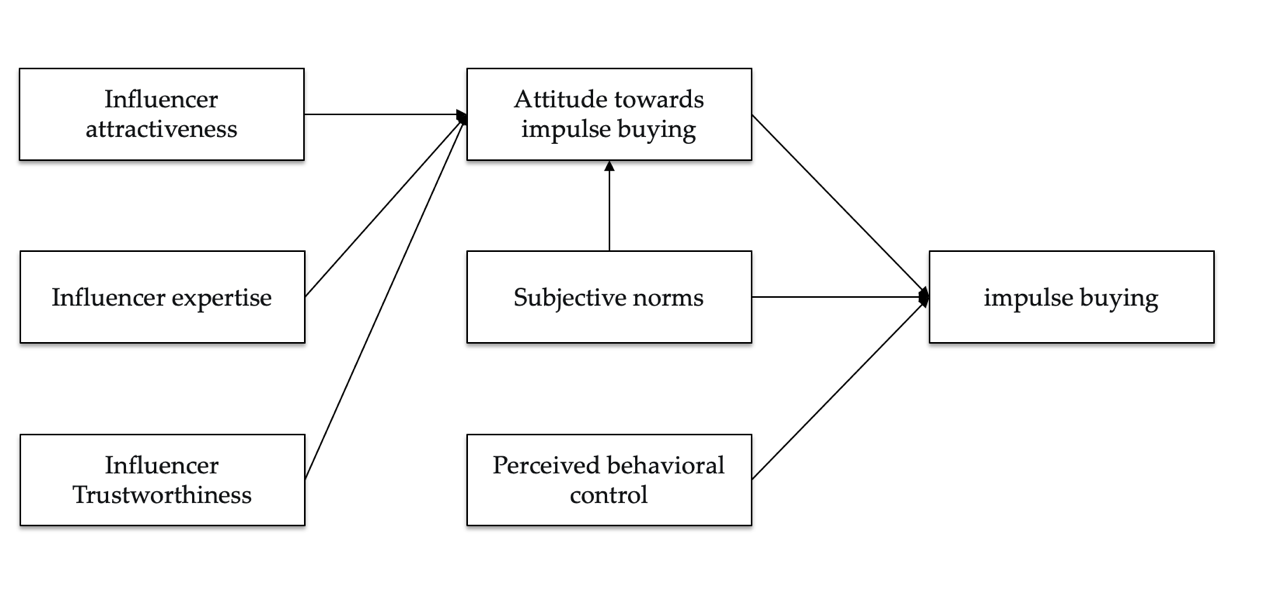
H1: Consumers’ positive attitude toward impulsive buying in livestream commerce significantly influences their impulsive buying behavior.
2.2.2. Subjective norms
From the perspective of impulsive buying motivation proposed by Li & Kang, this study defines subjective norms as the perceived social pressure to participate in impulsive buying within livestreaming commerce [40]. Social influence may stimulate consumers’ purchasing needs and modify their decisions. For instance, shoppers can be affected by recommendations from close social ties when making unplanned purchases [41]. Prior research indicates that subjective norms have a notable effect on impulsive buying behavior [42]. When consumers attach importance to others’ suggestions, they may be more inclined either to engage in impulsive purchases or to avoid them. Moreover, the works of Chang [43] and Tarkiainen & Sundqvist [39] demonstrate a significant causal association between subjective norms and attitude, shaping consumers’ behavioral intentions. Therefore, we hypothesize:
H2: Consumers' subjective norms positively influence impulsive buying behavior in livestreaming commerce.
H3: Consumers' subjective norms positively influence attitudes toward impulsive buying in livestreaming commerce.
2.2.3. Perceived behavioral control
The present studies define perceived behavioral control as consumers’ subjective perception of the ease or difficulty of executing impulsive buying behavior in the live commerce environment [40]. As an internal cognitive factor, perceived behavioral control reflects individuals’ subjective judgments of their own abilities, resources, and external conditions, which in turn influence their decision-making. When individuals perceive a lack of essential resources or capabilities, their intention to engage in impulsive buying may be weakened, even if they hold a favorable attitude toward impulsive purchases or receive recommendations from significant others.
Bandura et al. provided empirical evidence suggesting that individuals’ confidence in their ability to perform a behavior is influenced by multiple factors [44]. They include both internal factors (such as skills, knowledge, and experience) and external environmental factors (such as time pressure, availability of opportunities, and social support). In the context of impulsive buying, consumers' financial status, time constraints, and sense of social recognition may significantly impact their perceived behavioral control over impulsive buying behavior [45]. Given the immediacy and social interactivity of the live commerce environment, perceived behavioral control is dominant in determining whether consumers ultimately engage in impulsive buying. Therefore, we hypothesize:
H4: Perceived behavioral control regarding impulsive buying positively influences impulsive buying behavior in livestream commerce.
2.3. Source credibility theory
Source credibility refers to the extent to which the positive qualities of the communicator influence the audience's acceptance of the conveyed content [46]. It is a multidimensional concept. According to Hovland & Weiss, source credibility comprises two components: expertise and trustworthiness [47]. Expertise is the degree to which consumers perceive the information source as having sufficient ability to provide accurate information, and trustworthiness refers to the willingness to rely on another person's actions [2]. McGuire posits that source credibility also depends on the attractiveness of the information source, which is driven by familiarity, likability, and similarity [48]. Ohanian developed a three-dimensional scale to measure credibility, encompassing expertise, trustworthiness, and attractiveness [46, 47].
In live commerce, hosts play a crucial role in actively interacting with consumers through live streaming platforms, conveying product knowledge, and prompting purchasing decisions. They often possess a certain level of fame within the platform. Increasing evidence suggests that hosts, as individuals conveying information in live streams, attract significant attention from viewers and influence consumer decision-making [49]. This is manifested in the hosts acting as opinion leaders, with their expertise and reliability serving as critical factors that consumers consider while shopping [50]. Furthermore, an attractive spokesperson tends to elicit more favorable evaluations for advertising and marketing campaigns compared to a less attractive one [51].
2.3.1. Influencer attractiveness
Attractiveness is defined as the evaluation of one person’s physical appearance, personality, and similarity to another person [52]. Influencers with high attractiveness play a significant role in persuading customers [53], positively impacting both consumer attitudes toward advertisements and products and potentially shaping their followers' purchase intentions. Wan et al. propose that attractiveness is one of the most important factors influencing behavioral intentions, and it can be considered a part of attitudes [54]. Its significance has been validated in prior research, with Silvera & Austad indicating that the higher the physical attractiveness of advertising models, the more consumers tend to infer that the brands introduced in the advertisements are recommended to them [55]. Furthermore, in online environments such as live commerce, the visual experience is akin to that of a physical store: information presented through visual media can subtly influence consumers to add products to their purchase, a phenomenon closely related to impulsive buying behavior [56]. Therefore, we hypothesize:
H5: The attractiveness of influencers in live commerce positively affects consumers' attitudes toward impulsive buying.
2.3.2. Influencer expertise
Expertise refers to the extent to which a source of information can provide accurate and professional knowledge [57]. Furthermore, expertise is a key determinant of an individual's influence [58] and credibility [59] within social networks, directly affecting consumer beliefs and persuading them to purchase products. A source regarded as an expert is more persuasive and can positively influence consumers' purchasing attitudes [60]. Celebrity expertise can inspire consumers and reduce cognitive effort [61], while lower levels of cognitive load often lead consumers to think less and become more emotional, potentially fostering an attitude toward impulsive buying. Building on this, Liu et al. found that hosts with high levels of expertise facilitate consumers' impulsive buying decisions [62]. Therefore, we hypothesize:
H6: The expertise of influencers in live commerce positively affects consumers' attitudes toward impulsive buying.
2.3.3. Influencer trustworthiness
Trustworthiness reflects the ethical characteristics of the information provider, which ensure that the individual will deliver effective information [63]. When consumers believe a source is trustworthy, they are likely to view the conveyed information as highly credible [47]. Trustworthiness is a crucial factor influencing electronic Word-Of-Mouth (eWOM) and can also serve as persuasive information that significantly affects users' positive attitudes [64]. Furthermore, the trustworthiness of the information source can reduce cognitive processing, as consumers trust in individuals with high trustworthiness to lower their cognitive effort [65]. Conversely, lower trustworthiness may elicit a preventive response from consumers toward the source [61], potentially leading consumers to engage in more rational thinking. Therefore, we hypothesize:
H7: The trustworthiness of influencers in live commerce positively affects consumers' attitudes toward impulsive buying.
3. Methodology
3.1. Measurement development
All the constructs were adapted from existing literature with minor modifications. To assess various research variables, participants were asked to rate statements on a five-point scale, ranging from 1 (strongly disagree) to 5 (strongly agree). The construct of "celebrity attractiveness" was measured using four items from Jie et al. [66]. The "celebrity expertise" construct was assessed with four items from Sawmong [52]. The "celebrity trustworthiness" construct was also measured using four items from Sawmong [52]. Four items from Patel et al. [66] and Li & Kang [40] were employed to measure "attitude toward impulsive buying." The subjective norm regarding impulsive buying was assessed using three items from Li & Kang [40]. The construct of "perceived behavioral control regarding impulsive buying" was measured using four items from Shim & Altmann [13] and Li & Kang [40]. The structure of "impulsive buying" was assessed using items adapted from Wu et al. [67]. Figure 1 presents the research model of this study.
3.2. Sample and data collection
This study was conducted based on the recommendations of the Ethics Committee of the School of Economics and Management at Shandong Huayu University of Technology and strictly adhered to the principles of the Declaration of Helsinki. The research participants were selected from Chinese livestreaming users, primarily due to the rapid growth of livestream commerce in China and its representative role in the global market. Since frequent users of livestream commerce tend to have higher engagement and familiarity with livestream shopping, their consumption patterns and decision-making processes exhibit greater stability. Therefore, this study focused on users with a high frequency of livestream shopping. During data cleaning, invalid responses were excluded, such as those from respondents who had never made a purchase via livestreaming or whose last livestream shopping experience occurred a long time ago. Ultimately, a total of 310 valid responses were obtained.
Table 1 shows a descriptive analysis of the demographic characteristics of the respondents. The respondents are comprised of 43.5% male and 56.5% female. The majority of respondents (62.9%) are between 18 and 25 years old. In terms of education, approximately 54.2% of the respondents held a university degree, while around 31.9% had completed high school or lower (list them by order), and 13.9% had attained a graduate degree or higher. Among the respondents (professions or occupation), students represented the largest group at 41%. Regarding income, 138 respondents (44.5%) reported a monthly income of less than 3,000 RMB (distribution).
Table 2 provides a detailed account of the respondents' shopping experiences in live commerce. Among the respondents, 40.3% reported shopping in live streams 5 to 8 times per month, followed by 33.5% who indicated a frequency of 3 to 4 times per month. As for the live shopping platforms they frequently use, 89.7% of respondents reported shopping on TikTok, 41.3% on Taobao, and 31.9% on JD.com. Additionally, regarding the types of products frequently purchased during live streams, the majority of respondents (88.4%) reported buying furniture and household items, followed by 74.5% who purchased clothing and 66.5% who bought food and beverages. When asked about the timing of their most recent live shopping experience, 31.9% of respondents indicated that they made a purchase within the last three days, while 48.1% reported having shopped in the past week. To account for potential memory decay over time, responses indicating purchases made more than a month ago are excluded from the analysis.
|
Variable |
Item |
Frequency |
Percentage (%) |
|
Gender |
Male |
135 |
43.5 |
|
Female |
175 |
56.5 |
|
|
Age |
18-25 |
195 |
62.9 |
|
26-35 |
55 |
17.7 |
|
|
> 35 |
60 |
19.4 |
|
|
Education level |
High school and below |
99 |
31.9 |
|
University (including college) |
168 |
54.2 |
|
|
Master degree and above |
43 |
13.9 |
|
|
Occupation |
Student |
127 |
41 |
|
Private Sector Employee |
117 |
37.7 |
|
|
Public Sector Employee |
14 |
4.5 |
|
|
Self-employed |
48 |
15.5 |
|
|
Other |
4 |
1.3 |
|
|
Monthly income |
≤ 3,000 |
138 |
44.5 |
|
(CNY/¥) |
3,001-5,000 |
93 |
30 |
|
5,001-10,000 |
60 |
19.4 |
|
|
> 10,000 |
19 |
6.1 |
|
Variable |
Item |
Frequency |
Percentage(%) |
|
Frequency of LCS per month |
1-2 times |
37 |
11.9 |
|
3-4 times |
104 |
33.5 |
|
|
5-8 times |
125 |
40.3 |
|
|
>8 times |
44 |
14.2 |
|
|
LSP Commonly Used for Shopping |
TikTok |
278 |
89.7 |
|
Kwai |
64 |
20.6 |
|
|
Taobao |
128 |
41.3 |
|
|
JD.com |
99 |
31.9 |
|
|
Little Red Book |
75 |
24.2 |
|
|
Koala |
44 |
14.2 |
|
|
Purchased Product Categories |
Apparel and Accessories |
231 |
74.5 |
|
Cosmetics |
96 |
31 |
|
|
Electronic Products |
71 |
22.9 |
|
|
Furniture and Home Goods |
274 |
88.4 |
|
|
Food and Beverages |
206 |
66.5 |
|
|
Sports and Outdoor Products |
85 |
27.4 |
|
|
Other |
22 |
7.1 |
|
|
Time of Last Purchase |
≤ 3 days |
99 |
31.9 |
|
≤ 1 week |
149 |
48.1 |
|
|
≤ 1 month |
62 |
20 |
Note: LCS = Live Commerce Shopping ; LSP = Live Streaming Platforms
4. Results
4.1. Partial least square-structural equation modeling
This study employs the Partial Least Squares Structural Equation Modeling (PLS-SEM) method to assess the research model. Compared to traditional regression analysis, PLS-SEM effectively mitigates inherent biases in parameter estimation, imposes fewer restrictions on structural measurements, and is particularly useful when data do not meet the assumption of normal distribution [68]. The PLS-SEM approach involves a two-stage data analysis process: the measurement model and the structural model.
4.2. Measurement model analysis
The measurement model assesses the composite reliability, convergent validity, and discriminant validity of the constructs. The reliability of the measurement items is evaluated using Cronbach's alpha. All variables report Cronbach's alpha values greater than 0.7 (see Table 3), indicating a strong reliability of the measurements.
Convergent validity is assessed by checking the factor loadings, Average Variance Extracted (AVE), and Composite Reliability (CR). Hair et al. recommended that the factor loadings should be above 0.70, with CR > 0.70 and AVE > 0.5. Table 5 illustrates that all factor items loaded beyond these benchmarks without cross-loadings, verifying the presence of convergent validity and suggesting that all measurement items adequately capture their respective constructs.
Next, discriminant validity is evaluated by comparing the square root of AVE with the correlations among the constructs. It is advised that the square root of AVE should exceed the correlations. Table 3 shows that the square roots of AVE (in bold) are consistently higher than the off-diagonal correlation values, confirming sufficient discriminant validity. Based on the outcomes from both the measurement and structural models, the measurement strategy adopted in this research demonstrated acceptable validity and reliability. The study also applies the Fornell-Larcker criterion to assess Discriminant Validity (DV) as displayed in Table 4. This examination verifies that the square roots of the AVE for all variables are greater than their corresponding correlations. Moreover, in line with the guidance of Henseler et al., the Heterotrait-Monotrait Ratio (HTMT) is further employed to evaluate DV. As presented in Table 4, the HTMT values for the constructs remained below 0.90, implying that no concerns exist regarding discriminant validity.
|
Variable |
Item |
Standardized |
Cronbach's α |
Composite |
Average |
|
Influencer attractiveness |
IA1 |
0.859 |
0.874 |
0.886 |
0.727 |
|
IA2 |
0.855 |
||||
|
IA3 |
0.788 |
||||
|
IA4 |
0.904 |
||||
|
Influencer expertise |
IE1 |
0.782 |
0.895 |
0.935 |
0.755 |
|
IE2 |
0.924 |
||||
|
IE3 |
0.842 |
||||
|
IE4 |
0.920 |
||||
|
Influencer trustworthiness |
IT1 |
0.898 |
0.907 |
0.911 |
0.781 |
|
IT2 |
0.871 |
||||
|
IT3 |
0.859 |
||||
|
IT4 |
0.906 |
||||
|
Attitude |
AT1 |
0.904 |
0.870 |
0.871 |
0.720 |
|
AT2 |
0.861 |
||||
|
AT3 |
0.846 |
||||
|
AT4 |
0.778 |
||||
|
Subjective Norm |
SN1 |
0.829 |
0.870 |
0.875 |
0.795 |
|
SN2 |
0.931 |
||||
|
SN3 |
0.912 |
||||
|
Table 3. Continued |
|||||
|
Perceived Behavioral Control |
PBC1 |
0.807 |
0.882 |
0.884 |
0.740 |
|
PBC2 |
0.896 |
||||
|
PBC3 |
0.833 |
||||
|
PBC4 |
0.901 |
||||
|
Impulse buying behavior |
IBB1 |
0.916 |
0.881 |
0.884 |
0.809 |
|
IBB2 |
0.934 |
||||
|
IBB3 |
0.846 |
||||
|
Fornell-Larcker criterion |
|||||||
|
AT |
IA |
IBB |
IE |
IR |
PBC |
SN |
|
|
AT |
0.849 |
||||||
|
IA |
0.334 |
0.853 |
|||||
|
IBB |
0.394 |
0.471 |
0.900 |
||||
|
IE |
0.162 |
0.245 |
0.280 |
0.869 |
|||
|
IR |
0.23 |
0.302 |
0.449 |
0.311 |
0.884 |
||
|
PBC |
0.211 |
0.364 |
0.472 |
0.396 |
0.434 |
0.860 |
|
|
SN |
0.187 |
0.399 |
0.443 |
0.408 |
0.374 |
0.371 |
0.892 |
|
Note: Values (bold) on the diagonal represent the square root of the AVE while the off-diagonals are correlations. |
|||||||
|
HTMT Criterion |
|||||||
|
AT |
IA |
IBB |
IE |
IR |
PBC |
SN |
|
|
AT |
|||||||
|
IA |
0.374 |
||||||
|
IBB |
0.448 |
0.535 |
|||||
|
IE |
0.166 |
0.274 |
0.304 |
||||
|
IR |
0.253 |
0.342 |
0.503 |
0.344 |
|||
|
PBC |
0.236 |
0.418 |
0.536 |
0.442 |
0.488 |
||
|
SN |
0.211 |
0.463 |
0.507 |
0.469 |
0.421 |
0.424 |
|
|
Items |
AT |
IA |
IBB |
IE |
IR |
PBC |
SN |
|
AT1 |
0.904 |
0.230 |
0.315 |
0.122 |
0.153 |
0.132 |
0.137 |
|
AT2 |
0.858 |
0.340 |
0.318 |
0.208 |
0.241 |
0.232 |
0.202 |
|
AT3 |
0.846 |
0.251 |
0.332 |
0.168 |
0.204 |
0.161 |
0.151 |
|
AT4 |
0.781 |
0.294 |
0.367 |
0.042 |
0.169 |
0.179 |
0.136 |
|
IA1 |
0.310 |
0.859 |
0.430 |
0.209 |
0.237 |
0.286 |
0.328 |
|
IA2 |
0.256 |
0.855 |
0.371 |
0.199 |
0.229 |
0.276 |
0.331 |
|
IA3 |
0.246 |
0.788 |
0.368 |
0.177 |
0.292 |
0.359 |
0.373 |
|
IA4 |
0.314 |
0.904 |
0.429 |
0.244 |
0.278 |
0.327 |
0.338 |
|
IBB1 |
0.347 |
0.415 |
0.916 |
0.291 |
0.392 |
0.421 |
0.401 |
|
IBB2 |
0.388 |
0.423 |
0.934 |
0.226 |
0.418 |
0.43 |
0.41 |
|
IBB3 |
0.329 |
0.434 |
0.846 |
0.239 |
0.402 |
0.423 |
0.384 |
|
IE1 |
0.061 |
0.197 |
0.171 |
0.781 |
0.251 |
0.305 |
0.361 |
|
IE2 |
0.164 |
0.231 |
0.281 |
0.924 |
0.266 |
0.382 |
0.349 |
|
IE3 |
0.150 |
0.216 |
0.225 |
0.842 |
0.276 |
0.308 |
0.375 |
|
IE4 |
0.142 |
0.206 |
0.263 |
0.920 |
0.293 |
0.375 |
0.357 |
| Table 5. Continued | |||||||
|
IR1 |
0.185 |
0.247 |
0.396 |
0.247 |
0.899 |
0.405 |
0.326 |
|
IR2 |
0.225 |
0.243 |
0.396 |
0.277 |
0.871 |
0.346 |
0.306 |
|
IR3 |
0.206 |
0.272 |
0.373 |
0.311 |
0.859 |
0.367 |
0.361 |
|
IR4 |
0.188 |
0.310 |
0.423 |
0.259 |
0.906 |
0.423 |
0.329 |
|
PBC1 |
0.144 |
0.336 |
0.381 |
0.336 |
0.365 |
0.807 |
0.321 |
|
PBC2 |
0.186 |
0.284 |
0.423 |
0.334 |
0.384 |
0.896 |
0.334 |
|
PBC3 |
0.267 |
0.370 |
0.410 |
0.408 |
0.406 |
0.833 |
0.341 |
|
PBC4 |
0.127 |
0.264 |
0.409 |
0.285 |
0.338 |
0.901 |
0.279 |
|
SN1 |
0.116 |
0.391 |
0.388 |
0.350 |
0.327 |
0.316 |
0.829 |
|
SN2 |
0.191 |
0.356 |
0.403 |
0.385 |
0.362 |
0.341 |
0.930 |
|
SN3 |
0.190 |
0.324 |
0.395 |
0.357 |
0.312 |
0.334 |
0.912 |
4.3. Structural model analysis
Table 6 reports the outcomes of the structural path analysis. First, we applied PLS-SEM to estimate the path coefficients within the structural model. Next, with the assistance of bootstrapping using 5,000 resamples, we derived the standard errors and p-values for the path coefficients. The findings in Table 6 show that Attitude (AT) exerts a notable influence on Impulsive Buying Behavior (IBB), thus confirming Hypothesis 1 (H1). Furthermore, Subjective Norm (SN) also has a significant effect on IBB, thus supporting Hypothesis 2 (H2). However, SN does not have a significant effect on Attitude, leading to the rejection of Hypothesis 3 (H3). Perceived Behavioral Control (PBC) significantly impacts IBB, supporting Hypothesis 4 (H4).
Finally, Influencer Attractiveness (IA) and Influencer Reliability (IR) have significant effects on Attitude, supporting Hypotheses 5 (H5) and Hypotheses 7 (H7), while Influencer Expertise (IE) does not significantly affect Attitude, resulting in the rejection of Hypothesis 6 (H6). The results suggest that the explanatory power of the model is moderate, with an R² value of 0.378, indicating that the independent variables account for 37.8% of the variance in the dependent variable.
|
Direct effect |
Beta |
BCCI (2.5%-97.5%) |
t-value |
p value |
Decision |
|
|
H1 |
AT -> IBB |
0.277 |
[0.189,0.365] |
6.137 |
0.000 |
Supported |
|
H2 |
SN -> IBB |
0.276 |
[0.179,0.371] |
5.692 |
0.000 |
Supported |
|
H3 |
SN -> AT |
0.008 |
[-0.128,0.136] |
0.113 |
0.910 |
Not Supported |
|
H4 |
PBC -> IBB |
0.311 |
[0.217,0.404] |
6.578 |
0.000 |
Supported |
|
H5 |
IA -> AT |
0.280 |
[0.178,0.384] |
5.282 |
0.000 |
Supported |
|
H6 |
IE -> AT |
0.050 |
[-0.042,0.164] |
0.924 |
0.355 |
Not Supported |
|
H7 |
IT -> AT |
0.126 |
[0.015,0.240] |
2.197 |
0.028 |
Supported |
Notes: p < 0.05; R2 = 0.378
5. Discussion and conclusions
This study conducts an empirical analysis based on the Theory of Planned Behavior model. The results indicate that in the context of live commerce, consumers' attitudes, subjective norms, and perceived behavioral control significantly influence impulsive buying behavior, with perceived behavioral control having the most notable impact. This suggests that consumers may engage in a certain degree of rational thinking before making impulsive purchases in live commerce. As noted by Rook & Fisher, impulsive buying traits may be associated with actual purchasing behavior when consumers perceive impulsive buying as reasonable. Additionally, consumers' attitudes toward impulsive buying are influenced by emotional factors. When online users develop a positive attitude toward impulsive buying in the live commerce environment, the occurrence of impulsive buying behavior becomes more likely. It is noteworthy that in live commerce, when suggestions are provided by individuals whom consumers consider important, subjective norms do not have a significant direct impact on consumers' attitudes toward impulsive buying. This study posits that this may be due to the dominant role of emotional factors in consumer decision-making, where the positive influence of subjective norms is weakened by emotional responses. Impulsive buying is often accompanied by positive hedonic emotions [69]. This finding challenges the conventional assumption in the Theory of Planned Behavior (TPB) that subjective norms universally influence attitudes [16]. It also provides a new theoretical perspective for studying consumer behavior in the context of live commerce.
Moreover, cultural background may play a crucial role in this process. For instance, in individualistic cultures, consumers tend to rely more on personal emotions and preferences rather than social norms [70]. In contrast, in collectivist cultures, the highly interactive environment of live commerce may lead consumers to exhibit impulsive buying behavior due to group pressure or conformity. However, this influence does not appear to significantly shape their attitudes. Therefore, this study not only reveals the limitations of subjective norms in live commerce but also offers new insights for cross-cultural consumer behavior research.
Furthermore, As the findings suggest, the attractiveness and credibility of influencers in live commerce positively influence consumers' attitudes toward impulsive buying. However, their professional knowledge does not have a significant impact on impulsive buying attitudes. This indicates that when consumers perceive influencers as attractive and trustworthy, the positive emotional components of their attitudes are activated. In contrast, when consumers view them as experts, cognitive factors may be more likely to be triggered, as experts are expected to assist consumers in rational decision-making rather than solely influencing them through emotions.
It is important to note that this result may also be related to the trust mechanism consumers use to evaluate influencers' professional knowledge. In live commerce, consumers are often immersed in a highly emotional environment where real-time interaction and emotional expressions from influencers can easily evoke resonance [71]. Compared to this, professional knowledge, while important, may require a longer trust-building process to exert its influence. As a result, consumers tend to rely more on emotional responses rather than rational assessments of professional knowledge within a short time frame. Additionally, habitual consumer behavior may weaken the impact of professional knowledge on attitudes. For instance, long-established purchasing habits may reduce consumers' responsiveness to influencers' expertise. Future research could further explore these potential mediating factors in the relationship between professional knowledge and consumer attitudes.
5.1. Theoretical contribution
From an academic perspective, this study first distinguishes between emotional and cognitive factors that influence impulsive buying behavior based on the Theory of Planned Behavior, specifically focusing on attitudes, subjective norms, and perceived behavioral control [13]. The empirical analysis examines the roles of emotion and cognition in consumer impulsive buying behavior within the live commerce environment, providing a comprehensive explanation of the triggering factors behind consumers' impulsive buying behavior through the lens of the Theory of Planned Behavior.
Secondly, this research addresses the limitations of previous studies that primarily employed the Stimulus-Organism-Response (SOR) theory to investigate impulsive buying. While some scholars have explored impulsive buying using other theories such as cognitive-emotional theory [72] and signaling and social exchange theory [73], there remains insufficient research applying the Theory of Planned Behavior to this particular consumer behavior. This study fills that research gap.
Finally, this research discusses consumer attitudes toward impulsive buying behavior in live commerce by integrating the three dimensions of source credibility theory (attractiveness, expertise, and trustworthiness). It contributes to understanding the influence of celebrity host characteristics on consumers' impulsive buying attitudes in live commerce, revealing that celebrity hosts can establish an emotional connection with consumers through their attractiveness and credibility, thereby fostering positive attitudes toward impulsive buying.
5.2. Managerial implications
From a practical perspective, this research reveals the rational components of consumer impulsive buying, indicating that when consumers perceive a higher sense of control over their purchasing behavior, they are more likely to make impulsive buying decisions. Therefore, live commerce platforms and marketers can promote impulsive buying behaviors by creating a shopping environment that enhances consumers' sense of control. This can be achieved through designing user-friendly interfaces, providing clear product information, and ensuring a transparent purchasing process, thereby improving consumers' perceived behavioral control.
Regarding consumer attitudes, positive emotional responses are crucial for driving impulsive buying behavior. Marketers should focus on enhancing the emotional connection between consumers and celebrity hosts, particularly in terms of the hosts' credibility and attractiveness, as these factors positively influence consumers' attitudes toward impulsive buying. Companies can choose to collaborate with hosts who align closely with their target audience to establish a stronger emotional bond, thereby fostering impulsive buying behavior.
Concerning subjective norms, social influences also play an important role in the live commerce environment. When consumers perceive that significant others (such as peers or opinion leaders) endorse impulsive buying, they are more likely to engage in such behavior. Consequently, companies can leverage the power of social proof by utilizing real-time recommendations, user-generated content, and interactive features during live broadcasts (such as bullet comments and comment sections) to create a sense of community and encourage impulsive buying behavior.
5.3. Limitations and future research directions
This study has two limitations. First, live commerce can be categorized into two forms: one involves integrating live streaming functions within e-commerce platforms (e.g., Taobao), while the other entails adding e-commerce features to real-time broadcasting platforms [74]. In the first form, consumers participate in live commerce with a specific shopping purpose, whereas the second form leans more toward shopping during entertainment and social engagement, potentially leading to higher impulsive buying behavior. This study did not differentiate between these specific forms of live commerce. Future research could consider the distinct characteristics of these two types of platforms to explore their differing impacts on impulsive buying behavior.
Second, The model in this study explains 37.8% of the variance in impulsive buying behavior (R² = 0.378); however, a substantial proportion of the variance remains unexplained. This result suggests that the model may have omitted other important variables. For example, demographic factors (such as age, gender, and income level) and platform-specific factors (such as product type and promotional intensity) may significantly influence impulsive buying behavior. Existing studies have shown that in online shopping environments, women are more prone to impulsive purchases than men, and younger individuals exhibit higher impulsive buying frequencies compared to other age groups [75]. Therefore, future research could incorporate demographic variables to further explore gender and age-related differences in impulsive buying behavior within the live commerce context, thereby providing a more comprehensive and nuanced explanation of consumer behavior in live commerce settings.
Authorship
Xiang Liu and Ling Jin contribute equally to this work and should be considered co-first authors.
References
[1]. Sun, Y., Shao, X., Li, X., Guo, Y., & Nie, K. (2019). How live streaming influences purchase intentions in social commerce: An IT affordance perspective. Electronic commerce research and applications, 37, 100886.
[2]. Todd, P. R., & Melancon, J. (2018). Gender and live-streaming: source credibility and motivation. Journal of Research in Interactive Marketing, 12(1), 79-93.
[3]. Park, H. J., & Lin, L. M. (2020). The effects of match-ups on the consumer attitudes toward internet celebrities and their live streaming contents in the context of product endorsement. Journal of retailing and consumer services, 52, 101934.
[4]. Li, M., Wang, Q., & Cao, Y. (2022). Understanding consumer online impulse buying in live streaming e-commerce: A stimulus-organism-response framework. International journal of environmental research and public health, 19(7), 4378.
[5]. Wen, J., & Lee, H. (2020). What factors of live streaming commerce appeal to Chinese consumers? The influences of platform and BJ characteristics on purchase intention and the moderating effects of gender. The e-Business Studies, 21(5), 215-234.
[6]. Greenwald, M. (2020). Live streaming e-commerce is the rage in China. Is the US Next?. Forbes, available at: https: //www. forbes. com/sites/michellegreenwald/2020/12/10/live-streaming-e-commerce-is-the-rage-in-china-is-the-us-next/(accessed 14 October 2021).
[7]. Liu, Y., Li, H., & Hu, F. (2013). Website attributes in urging online impulse purchase: An empirical investigation on consumer perceptions. Decision support systems, 55(3), 829-837.
[8]. Baumeister, R. F. (2002). Yielding to temptation: Self-control failure, impulsive purchasing, and consumer behavior. Journal of consumer Research, 28(4), 670-676.
[9]. Barnabas, A., Prajnawira, F., Della, V., & Kristin, D. M. (2024, July). Critical Factors Influencing Impulsive Buying in Live Streaming E-Commerce Environments: A Systematic Literature Review. In 2024 International Conference on Electrical, Computer and Energy Technologies (ICECET (pp. 1-6). IEEE.
[10]. Chen, H., Dou, Y., & Xiao, Y. (2023). Understanding the role of live streamers in live-streaming e-commerce. Electronic commerce research and applications, 59, 101266.
[11]. Shamim, K., Azam, M., & Islam, T. (2024). How do social media influencers induce the urge to buy impulsively? Social commerce context. Journal of Retailing and Consumer Services, 77, 103621.
[12]. Li, X., Huang, D., Dong, G., & Wang, B. (2024). Why consumers have impulsive purchase behavior in live streaming: the role of the streamer. BMC psychology, 12(1), 129.
[13]. Shim, D., & Altmann, J. (2016). How marginally does impulse buying intention change in social commerce? Nonparametric regression approach. Global Media Journal, 14(27), 1-13.
[14]. Courneya, K. S. (1995). Understanding readiness for regular physical activity in older individuals: an application of the theory of planned behavior. Health psychology, 14(1), 80.
[15]. Hausenblas, H. A., Carron, A. V., & Mack, D. E. (1997). Application of the theories of reasoned action and planned behavior to exercise behavior: A meta-analysis. Journal of sport and exercise psychology, 19(1), 36-51.
[16]. Ajzen, I. (1991). The theory of planned behavior. Organizational behavior and human decision processes, 50(2), 179-211.
[17]. Rook, D. W. (1987). The buying impulse. Journal of consumer research, 14(2), 189-199.
[18]. Beatty, S. E., & Ferrell, M. E. (1998). Impulse buying: Modeling its precursors. Journal of retailing, 74(2), 169-191.
[19]. Bagozzi, R. P., Gopinath, M., & Nyer, P. U. (1999). The role of emotions in marketing. Journal of the academy of marketing science, 27(2), 184-206.
[20]. Cai, J., Wohn, D. Y., Mittal, A., & Sureshbabu, D. (2018, June). Utilitarian and hedonic motivations for live streaming shopping. In Proceedings of the 2018 ACM international conference on interactive experiences for TV and online video (pp. 81-88).
[21]. Vukadin, A., Wongkitrungrueng, A., & Assarut, N. (2018). When art meets mall: Impact on shopper responses. Journal of Product & Brand Management, 27(3), 277-293.
[22]. Wongkitrungrueng, A., & Assarut, N. (2020). The role of live streaming in building consumer trust and engagement with social commerce sellers. Journal of business research, 117, 543-556.
[23]. Floh, A., & Madlberger, M. (2013). The role of atmospheric cues in online impulse-buying behavior. Electronic commerce research and applications, 12(6), 425-439.
[24]. LaRose, R. (2001). On the negative effects of e-commerce: A sociocognitive exploration of unregulated on-line buying. Journal of Computer-Mediated Communication, 6(3), JCMC631.
[25]. Chen, X., Kassas, B., & Gao, Z. (2021). Impulsive purchasing in grocery shopping: Do the shopping companions matter?. Journal of Retailing and Consumer Services, 60, 102495.
[26]. Zafar, A. U., Shen, J., Shahzad, M., & Islam, T. (2021). Relation of impulsive urges and sustainable purchase decisions in the personalized environment of social media. Sustainable Production and Consumption, 25, 591-603.
[27]. Badgaiyan, A. J., & Verma, A. (2014). Intrinsic factors affecting impulsive buying behaviour—Evidence from India. Journal of Retailing and consumer services, 21(4), 537-549.
[28]. Rehman, S. U., Bhatti, A., Mohamed, R., & Ayoup, H. (2019). The moderating role of trust and commitment between consumer purchase intention and online shopping behavior in the context of Pakistan. Journal of Global Entrepreneurship Research, 9(1), 1-25.
[29]. Tan, K. L., Sia, J. K. M., & Tang, D. K. H. (2022). To verify or not to verify: using partial least squares to predict effect of online news on panic buying during pandemic. Asia Pacific Journal of Marketing and Logistics, 34(4), 647-668.
[30]. Zafar, D., Khan, S., Khan, M. I., Parachi, S., & Saleem, A. (2022). The Factors influencing entrepreneurship capabilities in Pakistan. International journal of social science & entrepreneurship, 2(2), 47-71.
[31]. Cialdini, R. B., Kallgren, C. A., & Reno, R. R. (1991). A focus theory of normative conduct: A theoretical refinement and reevaluation of the role of norms in human behavior. In Advances in experimental social psychology (Vol. 24, pp. 201-234). Academic Press.
[32]. Godin, G., & Kok, G. (1996). The theory of planned behavior: a review of its applications to health-related behaviors. American journal of health promotion, 11(2), 87-98.
[33]. Ajzen, I. (2011). The theory of planned behaviour: Reactions and reflections. Psychology & health, 26(9), 1113-1127.
[34]. Hagger, M. S., Chatzisarantis, N. L., & Biddle, S. J. (2002). A meta-analytic review of the theories of reasoned action and planned behavior in physical activity: Predictive validity and the contribution of additional variables. Journal of sport and exercise psychology, 24(1), 3-32.
[35]. Sharma, P., Sivakumaran, B., & Marshall, R. (2010). Impulse buying and variety seeking: A trait-correlates perspective. Journal of Business research, 63(3), 276-283.
[36]. Liu, Y., Cai, L., Ma, F., & Wang, X. (2023). Revenge buying after the lockdown: Based on the SOR framework and TPB model. Journal of Retailing and Consumer Services, 72, 103263.
[37]. Dholakia, U. M. (2000). Temptation and resistance: An integrated model of consumption impulse formation and enactment. Psychology & Marketing, 17(11), 955-982.
[38]. Vishnu, P., & Raheem, A. R. (2013). Factors influencing impulse buying behavior. European Journal of Scientific Research, 100(3), 67-79.
[39]. Tarkiainen, A., & Sundqvist, S. (2005). Subjective norms, attitudes and intentions of Finnish consumers in buying organic food. British food journal, 107(11), 808-822.
[40]. Li, L., & Kang, K. (2023). Discovering online Chinese consumers’ impulse buying in live streaming by the theory of planned behavior. Journal of Economic Analysis, 3(2), 121-133
[41]. Duan, W., Gu, B., & Whinston, A. B. (2008). Do online reviews matter?—An empirical investigation of panel data. Decision support systems, 45(4), 1007-1016.
[42]. Rook, D. W., & Fisher, R. J. (1995). Normative influences on impulsive buying behavior. Journal of consumer research, 22(3), 305-313.
[43]. Chang, M. K. (1998). Predicting unethical behavior: a comparison of the theory of reasoned action and the theory of planned behavior. Journal of business ethics, 17(16), 1825-1834.
[44]. Bandura, A., Adams, N. E., Hardy, A. B., & Howells, G. N. (1980). Tests of the generality of self-efficacy theory. Cognitive therapy and research, 4(1), 39-66.
[45]. Hoch, S. J., & Loewenstein, G. F. (1991). Time-inconsistent preferences and consumer self-control. Journal of consumer research, 17(4), 492-507.
[46]. Ohanian, R. (1990). Construction and validation of a scale to measure celebrity endorsers' perceived expertise, trustworthiness, and attractiveness. Journal of advertising, 19(3), 39-52.
[47]. Hovland, C. I., & Weiss, W. (1951). The influence of source credibility on communication effectiveness. Public opinion quarterly, 15(4), 635-650.z
[48]. McGuire, W. J. (1985). Toward social psychology's second century. In S. Koch & D. E. Leary (Eds.), A century of psychology as science (pp. 55-590). New York: McGraw Hill.
[49]. Chen, Y. (2022, January). Influencing mechanism of live broadcasting marketing pattern on consumers’ purchase decision internet background. In Innovative Computing: Proceedings of the 4th International Conference on Innovative Computing (IC 2021) (pp. 819-826). Singapore: Springer Nature Singapore.
[50]. Fei, H. P., & Zhou, C. C. (2021). Anchor type, brand attitude and purchase intention experimental research on online live shopping scene. J. Henan Normal University (Philosophy and Social Sciences), 48(10), 80-89.
[51]. Wang, S., & Scheinbaum, A. C. (2017). Trustworthiness trumps attractiveness and expertise: enhancing brand credibility via celebrity endorsement. Journal of Advertising Research, 58(1), 042.
[52]. Sawmong, S. (2022). Examining the key factors that drives live stream shopping behavior. Emerging Science Journal, 6(6), 1394-1408.
[53]. Wu, C., & Shaffer, D. R. (1987). Susceptibility to persuasive appeals as a function of source credibility and prior experience with the attitude object. Journal of personality and social psychology, 52(4), 677.
[54]. Wan, J., Ma, H., Zhou, W., Qin, M., & Li, P. (2024). The study of female college students' consumer psychology mechanism toward male celebrity endorsed products: Tempted or coerced?. Heliyon, 10(9), e30401.
[55]. Silvera, D. H., & Austad, B. (2004). Factors predicting the effectiveness of celebrity endorsement advertisements. European Journal of marketing, 38(11/12), 1509-1526.
[56]. Bhalla, S., & Anuraag, S. (2010). Visual merchandising. Tata McGraw-Hill Education.
[57]. Wu, P. C., & Wang, Y. C. (2011). The influences of electronic word‐of‐mouth message appeal and message source credibility on brand attitude. Asia Pacific Journal of Marketing and Logistics, 23(4), 448-472.
[58]. Aral, S. (2011). Commentary—Identifying social influence: A comment on opinion leadership and social contagion in new product diffusion. Marketing Science, 30(2), 217-223.
[59]. Burnkrant, R. E., & Cousineau, A. (1975). Informational and normative social influence in buyer behavior. Journal of Consumer research, 2(3), 206-215.
[60]. Aaker, D. A. (81). Myers; JG (1987). Advertising Management. New York: Prentice Hall
[61]. Yang, P., Sheng, H., Yang, C., & Feng, Y. (2024). How social media promotes impulsive buying: examining the role of customer inspiration. Industrial Management & Data Systems, 124(2), 698-723.
[62]. Liu, X., Wang, D., Gu, M., & Yang, J. (2023). Research on the influence mechanism of anchors’ professionalism on consumers’ impulse buying intention in the livestream shopping scenario. Enterprise Information Systems, 17(7), 2065457.
[63]. Sussman, S. W., & Siegal, W. S. (2003). Informational influence in organizations: An integrated approach to knowledge adoption. Information systems research, 14(1), 47-65.
[64]. Ayeh, J. K., Au, N., & Law, R. (2013). “Do we believe in TripAdvisor?” Examining credibility perceptions and online travelers’ attitude toward using user-generated content. Journal of Travel Research, 52(4), 437-452.
[65]. Hinsch, C., Felix, R., & Rauschnabel, P. A. (2020). Nostalgia beats the wow-effect: Inspiration, awe and meaningful associations in augmented reality marketing. Journal of Retailing and Consumer Services, 53, 101987.
[66]. Xu, X., Wu, J. H., & Li, Q. (2020). What drives consumer shopping behavior in live streaming commerce?. Journal of electronic commerce research, 21(3), 144-167.
[67]. Patel, A. K., Singh, A., Rana, N. P., Parayitam, S., Dwivedi, Y. K., & Dutot, V. (2023). Assessing customers' attitude towards online apparel shopping: A three-way interaction model. Journal of Business Research, 164, 113917.
[68]. Wu, L., Chen, K. W., & Chiu, M. L. (2016). Defining key drivers of online impulse purchasing: A perspective of both impulse shoppers and system users. International Journal of Information Management, 36(3), 284-296.
[69]. F. Hair Jr, J., Sarstedt, M., Hopkins, L., & G. Kuppelwieser, V. (2014). Partial least squares structural equation modeling (PLS-SEM) An emerging tool in business research. European business review, 26(2), 106-121.
[70]. Li, Y. (2016). Empirical study of influential factors of online customers’ repurchase intention. IBusiness, 8(3), 48-60.
[71]. Hofstede, G. (1984). Culture's consequences: International differences in work-related values (Vol. 5). sage.
[72]. Lu, B., & Chen, Z. (2021). Live streaming commerce and consumers’ purchase intention: An uncertainty reduction perspective. Information & Management, 58(7), 103509.
[73]. Habib, M. D., & Qayyum, A. (2018). Cognitive emotion theory and emotion-action tendency in online impulsive buying behavior. Journal of Management Sciences, 5(1), 86-99.
[74]. Luo, X., Cheah, J. H., Lim, X. J., Ramayah, T., & Dwivedi, Y. K. (2025). Inducing shoppers’ impulsive buying tendency in live-streaming: integrating signaling theory with social exchange theory. Internet Research, 35(1), 318-348.
[75]. Cai, J., & Wohn, D. Y. (2019). Live streaming commerce: Uses and gratifications approach to understanding consumers’ motivations. In Proceedings of the 52nd Hawaii International Conference on System Sciences, 2548-2557.
[76]. Coley, A., & Burgess, B. (2003). Gender differences in cognitive and affective impulse buying. Journal of Fashion Marketing and Management: An International Journal, 7(3), 282-295.
Cite this article
Liu,X.;Jin,L. (2025). A study on the factors influencing consumer impulsive buying in live commerce: based on the Theory of Planned Behavior (TPB) model. Advances in Social Behavior Research,16(8),1-13.
Data availability
The datasets used and/or analyzed during the current study will be available from the authors upon reasonable request.
Disclaimer/Publisher's Note
The statements, opinions and data contained in all publications are solely those of the individual author(s) and contributor(s) and not of EWA Publishing and/or the editor(s). EWA Publishing and/or the editor(s) disclaim responsibility for any injury to people or property resulting from any ideas, methods, instructions or products referred to in the content.
About volume
Journal:Advances in Social Behavior Research
© 2024 by the author(s). Licensee EWA Publishing, Oxford, UK. This article is an open access article distributed under the terms and
conditions of the Creative Commons Attribution (CC BY) license. Authors who
publish this series agree to the following terms:
1. Authors retain copyright and grant the series right of first publication with the work simultaneously licensed under a Creative Commons
Attribution License that allows others to share the work with an acknowledgment of the work's authorship and initial publication in this
series.
2. Authors are able to enter into separate, additional contractual arrangements for the non-exclusive distribution of the series's published
version of the work (e.g., post it to an institutional repository or publish it in a book), with an acknowledgment of its initial
publication in this series.
3. Authors are permitted and encouraged to post their work online (e.g., in institutional repositories or on their website) prior to and
during the submission process, as it can lead to productive exchanges, as well as earlier and greater citation of published work (See
Open access policy for details).
References
[1]. Sun, Y., Shao, X., Li, X., Guo, Y., & Nie, K. (2019). How live streaming influences purchase intentions in social commerce: An IT affordance perspective. Electronic commerce research and applications, 37, 100886.
[2]. Todd, P. R., & Melancon, J. (2018). Gender and live-streaming: source credibility and motivation. Journal of Research in Interactive Marketing, 12(1), 79-93.
[3]. Park, H. J., & Lin, L. M. (2020). The effects of match-ups on the consumer attitudes toward internet celebrities and their live streaming contents in the context of product endorsement. Journal of retailing and consumer services, 52, 101934.
[4]. Li, M., Wang, Q., & Cao, Y. (2022). Understanding consumer online impulse buying in live streaming e-commerce: A stimulus-organism-response framework. International journal of environmental research and public health, 19(7), 4378.
[5]. Wen, J., & Lee, H. (2020). What factors of live streaming commerce appeal to Chinese consumers? The influences of platform and BJ characteristics on purchase intention and the moderating effects of gender. The e-Business Studies, 21(5), 215-234.
[6]. Greenwald, M. (2020). Live streaming e-commerce is the rage in China. Is the US Next?. Forbes, available at: https: //www. forbes. com/sites/michellegreenwald/2020/12/10/live-streaming-e-commerce-is-the-rage-in-china-is-the-us-next/(accessed 14 October 2021).
[7]. Liu, Y., Li, H., & Hu, F. (2013). Website attributes in urging online impulse purchase: An empirical investigation on consumer perceptions. Decision support systems, 55(3), 829-837.
[8]. Baumeister, R. F. (2002). Yielding to temptation: Self-control failure, impulsive purchasing, and consumer behavior. Journal of consumer Research, 28(4), 670-676.
[9]. Barnabas, A., Prajnawira, F., Della, V., & Kristin, D. M. (2024, July). Critical Factors Influencing Impulsive Buying in Live Streaming E-Commerce Environments: A Systematic Literature Review. In 2024 International Conference on Electrical, Computer and Energy Technologies (ICECET (pp. 1-6). IEEE.
[10]. Chen, H., Dou, Y., & Xiao, Y. (2023). Understanding the role of live streamers in live-streaming e-commerce. Electronic commerce research and applications, 59, 101266.
[11]. Shamim, K., Azam, M., & Islam, T. (2024). How do social media influencers induce the urge to buy impulsively? Social commerce context. Journal of Retailing and Consumer Services, 77, 103621.
[12]. Li, X., Huang, D., Dong, G., & Wang, B. (2024). Why consumers have impulsive purchase behavior in live streaming: the role of the streamer. BMC psychology, 12(1), 129.
[13]. Shim, D., & Altmann, J. (2016). How marginally does impulse buying intention change in social commerce? Nonparametric regression approach. Global Media Journal, 14(27), 1-13.
[14]. Courneya, K. S. (1995). Understanding readiness for regular physical activity in older individuals: an application of the theory of planned behavior. Health psychology, 14(1), 80.
[15]. Hausenblas, H. A., Carron, A. V., & Mack, D. E. (1997). Application of the theories of reasoned action and planned behavior to exercise behavior: A meta-analysis. Journal of sport and exercise psychology, 19(1), 36-51.
[16]. Ajzen, I. (1991). The theory of planned behavior. Organizational behavior and human decision processes, 50(2), 179-211.
[17]. Rook, D. W. (1987). The buying impulse. Journal of consumer research, 14(2), 189-199.
[18]. Beatty, S. E., & Ferrell, M. E. (1998). Impulse buying: Modeling its precursors. Journal of retailing, 74(2), 169-191.
[19]. Bagozzi, R. P., Gopinath, M., & Nyer, P. U. (1999). The role of emotions in marketing. Journal of the academy of marketing science, 27(2), 184-206.
[20]. Cai, J., Wohn, D. Y., Mittal, A., & Sureshbabu, D. (2018, June). Utilitarian and hedonic motivations for live streaming shopping. In Proceedings of the 2018 ACM international conference on interactive experiences for TV and online video (pp. 81-88).
[21]. Vukadin, A., Wongkitrungrueng, A., & Assarut, N. (2018). When art meets mall: Impact on shopper responses. Journal of Product & Brand Management, 27(3), 277-293.
[22]. Wongkitrungrueng, A., & Assarut, N. (2020). The role of live streaming in building consumer trust and engagement with social commerce sellers. Journal of business research, 117, 543-556.
[23]. Floh, A., & Madlberger, M. (2013). The role of atmospheric cues in online impulse-buying behavior. Electronic commerce research and applications, 12(6), 425-439.
[24]. LaRose, R. (2001). On the negative effects of e-commerce: A sociocognitive exploration of unregulated on-line buying. Journal of Computer-Mediated Communication, 6(3), JCMC631.
[25]. Chen, X., Kassas, B., & Gao, Z. (2021). Impulsive purchasing in grocery shopping: Do the shopping companions matter?. Journal of Retailing and Consumer Services, 60, 102495.
[26]. Zafar, A. U., Shen, J., Shahzad, M., & Islam, T. (2021). Relation of impulsive urges and sustainable purchase decisions in the personalized environment of social media. Sustainable Production and Consumption, 25, 591-603.
[27]. Badgaiyan, A. J., & Verma, A. (2014). Intrinsic factors affecting impulsive buying behaviour—Evidence from India. Journal of Retailing and consumer services, 21(4), 537-549.
[28]. Rehman, S. U., Bhatti, A., Mohamed, R., & Ayoup, H. (2019). The moderating role of trust and commitment between consumer purchase intention and online shopping behavior in the context of Pakistan. Journal of Global Entrepreneurship Research, 9(1), 1-25.
[29]. Tan, K. L., Sia, J. K. M., & Tang, D. K. H. (2022). To verify or not to verify: using partial least squares to predict effect of online news on panic buying during pandemic. Asia Pacific Journal of Marketing and Logistics, 34(4), 647-668.
[30]. Zafar, D., Khan, S., Khan, M. I., Parachi, S., & Saleem, A. (2022). The Factors influencing entrepreneurship capabilities in Pakistan. International journal of social science & entrepreneurship, 2(2), 47-71.
[31]. Cialdini, R. B., Kallgren, C. A., & Reno, R. R. (1991). A focus theory of normative conduct: A theoretical refinement and reevaluation of the role of norms in human behavior. In Advances in experimental social psychology (Vol. 24, pp. 201-234). Academic Press.
[32]. Godin, G., & Kok, G. (1996). The theory of planned behavior: a review of its applications to health-related behaviors. American journal of health promotion, 11(2), 87-98.
[33]. Ajzen, I. (2011). The theory of planned behaviour: Reactions and reflections. Psychology & health, 26(9), 1113-1127.
[34]. Hagger, M. S., Chatzisarantis, N. L., & Biddle, S. J. (2002). A meta-analytic review of the theories of reasoned action and planned behavior in physical activity: Predictive validity and the contribution of additional variables. Journal of sport and exercise psychology, 24(1), 3-32.
[35]. Sharma, P., Sivakumaran, B., & Marshall, R. (2010). Impulse buying and variety seeking: A trait-correlates perspective. Journal of Business research, 63(3), 276-283.
[36]. Liu, Y., Cai, L., Ma, F., & Wang, X. (2023). Revenge buying after the lockdown: Based on the SOR framework and TPB model. Journal of Retailing and Consumer Services, 72, 103263.
[37]. Dholakia, U. M. (2000). Temptation and resistance: An integrated model of consumption impulse formation and enactment. Psychology & Marketing, 17(11), 955-982.
[38]. Vishnu, P., & Raheem, A. R. (2013). Factors influencing impulse buying behavior. European Journal of Scientific Research, 100(3), 67-79.
[39]. Tarkiainen, A., & Sundqvist, S. (2005). Subjective norms, attitudes and intentions of Finnish consumers in buying organic food. British food journal, 107(11), 808-822.
[40]. Li, L., & Kang, K. (2023). Discovering online Chinese consumers’ impulse buying in live streaming by the theory of planned behavior. Journal of Economic Analysis, 3(2), 121-133
[41]. Duan, W., Gu, B., & Whinston, A. B. (2008). Do online reviews matter?—An empirical investigation of panel data. Decision support systems, 45(4), 1007-1016.
[42]. Rook, D. W., & Fisher, R. J. (1995). Normative influences on impulsive buying behavior. Journal of consumer research, 22(3), 305-313.
[43]. Chang, M. K. (1998). Predicting unethical behavior: a comparison of the theory of reasoned action and the theory of planned behavior. Journal of business ethics, 17(16), 1825-1834.
[44]. Bandura, A., Adams, N. E., Hardy, A. B., & Howells, G. N. (1980). Tests of the generality of self-efficacy theory. Cognitive therapy and research, 4(1), 39-66.
[45]. Hoch, S. J., & Loewenstein, G. F. (1991). Time-inconsistent preferences and consumer self-control. Journal of consumer research, 17(4), 492-507.
[46]. Ohanian, R. (1990). Construction and validation of a scale to measure celebrity endorsers' perceived expertise, trustworthiness, and attractiveness. Journal of advertising, 19(3), 39-52.
[47]. Hovland, C. I., & Weiss, W. (1951). The influence of source credibility on communication effectiveness. Public opinion quarterly, 15(4), 635-650.z
[48]. McGuire, W. J. (1985). Toward social psychology's second century. In S. Koch & D. E. Leary (Eds.), A century of psychology as science (pp. 55-590). New York: McGraw Hill.
[49]. Chen, Y. (2022, January). Influencing mechanism of live broadcasting marketing pattern on consumers’ purchase decision internet background. In Innovative Computing: Proceedings of the 4th International Conference on Innovative Computing (IC 2021) (pp. 819-826). Singapore: Springer Nature Singapore.
[50]. Fei, H. P., & Zhou, C. C. (2021). Anchor type, brand attitude and purchase intention experimental research on online live shopping scene. J. Henan Normal University (Philosophy and Social Sciences), 48(10), 80-89.
[51]. Wang, S., & Scheinbaum, A. C. (2017). Trustworthiness trumps attractiveness and expertise: enhancing brand credibility via celebrity endorsement. Journal of Advertising Research, 58(1), 042.
[52]. Sawmong, S. (2022). Examining the key factors that drives live stream shopping behavior. Emerging Science Journal, 6(6), 1394-1408.
[53]. Wu, C., & Shaffer, D. R. (1987). Susceptibility to persuasive appeals as a function of source credibility and prior experience with the attitude object. Journal of personality and social psychology, 52(4), 677.
[54]. Wan, J., Ma, H., Zhou, W., Qin, M., & Li, P. (2024). The study of female college students' consumer psychology mechanism toward male celebrity endorsed products: Tempted or coerced?. Heliyon, 10(9), e30401.
[55]. Silvera, D. H., & Austad, B. (2004). Factors predicting the effectiveness of celebrity endorsement advertisements. European Journal of marketing, 38(11/12), 1509-1526.
[56]. Bhalla, S., & Anuraag, S. (2010). Visual merchandising. Tata McGraw-Hill Education.
[57]. Wu, P. C., & Wang, Y. C. (2011). The influences of electronic word‐of‐mouth message appeal and message source credibility on brand attitude. Asia Pacific Journal of Marketing and Logistics, 23(4), 448-472.
[58]. Aral, S. (2011). Commentary—Identifying social influence: A comment on opinion leadership and social contagion in new product diffusion. Marketing Science, 30(2), 217-223.
[59]. Burnkrant, R. E., & Cousineau, A. (1975). Informational and normative social influence in buyer behavior. Journal of Consumer research, 2(3), 206-215.
[60]. Aaker, D. A. (81). Myers; JG (1987). Advertising Management. New York: Prentice Hall
[61]. Yang, P., Sheng, H., Yang, C., & Feng, Y. (2024). How social media promotes impulsive buying: examining the role of customer inspiration. Industrial Management & Data Systems, 124(2), 698-723.
[62]. Liu, X., Wang, D., Gu, M., & Yang, J. (2023). Research on the influence mechanism of anchors’ professionalism on consumers’ impulse buying intention in the livestream shopping scenario. Enterprise Information Systems, 17(7), 2065457.
[63]. Sussman, S. W., & Siegal, W. S. (2003). Informational influence in organizations: An integrated approach to knowledge adoption. Information systems research, 14(1), 47-65.
[64]. Ayeh, J. K., Au, N., & Law, R. (2013). “Do we believe in TripAdvisor?” Examining credibility perceptions and online travelers’ attitude toward using user-generated content. Journal of Travel Research, 52(4), 437-452.
[65]. Hinsch, C., Felix, R., & Rauschnabel, P. A. (2020). Nostalgia beats the wow-effect: Inspiration, awe and meaningful associations in augmented reality marketing. Journal of Retailing and Consumer Services, 53, 101987.
[66]. Xu, X., Wu, J. H., & Li, Q. (2020). What drives consumer shopping behavior in live streaming commerce?. Journal of electronic commerce research, 21(3), 144-167.
[67]. Patel, A. K., Singh, A., Rana, N. P., Parayitam, S., Dwivedi, Y. K., & Dutot, V. (2023). Assessing customers' attitude towards online apparel shopping: A three-way interaction model. Journal of Business Research, 164, 113917.
[68]. Wu, L., Chen, K. W., & Chiu, M. L. (2016). Defining key drivers of online impulse purchasing: A perspective of both impulse shoppers and system users. International Journal of Information Management, 36(3), 284-296.
[69]. F. Hair Jr, J., Sarstedt, M., Hopkins, L., & G. Kuppelwieser, V. (2014). Partial least squares structural equation modeling (PLS-SEM) An emerging tool in business research. European business review, 26(2), 106-121.
[70]. Li, Y. (2016). Empirical study of influential factors of online customers’ repurchase intention. IBusiness, 8(3), 48-60.
[71]. Hofstede, G. (1984). Culture's consequences: International differences in work-related values (Vol. 5). sage.
[72]. Lu, B., & Chen, Z. (2021). Live streaming commerce and consumers’ purchase intention: An uncertainty reduction perspective. Information & Management, 58(7), 103509.
[73]. Habib, M. D., & Qayyum, A. (2018). Cognitive emotion theory and emotion-action tendency in online impulsive buying behavior. Journal of Management Sciences, 5(1), 86-99.
[74]. Luo, X., Cheah, J. H., Lim, X. J., Ramayah, T., & Dwivedi, Y. K. (2025). Inducing shoppers’ impulsive buying tendency in live-streaming: integrating signaling theory with social exchange theory. Internet Research, 35(1), 318-348.
[75]. Cai, J., & Wohn, D. Y. (2019). Live streaming commerce: Uses and gratifications approach to understanding consumers’ motivations. In Proceedings of the 52nd Hawaii International Conference on System Sciences, 2548-2557.
[76]. Coley, A., & Burgess, B. (2003). Gender differences in cognitive and affective impulse buying. Journal of Fashion Marketing and Management: An International Journal, 7(3), 282-295.