


Volume 16 Issue 11
Published on December 2025The impact of China–US strategic competition extends beyond bilateral relations between the two countries, affecting Japan, South Korea, and the broader construction of the Northeast Asian order to varying degrees. Since the Trump administration, excessive domestic focus has led to a conservative approach to alliance policies, resulting in a relative loosening of the Japan-US and South Korea-US alliances. Meanwhile, China–Japan and China–South Korea relations have continued to make new progress, presenting a favorable opportunity to further develop trilateral relations, actively promote negotiations for a China–Japan–South Korea Free Trade Area, and jointly advance the development of a new Northeast Asian order. Northeast Asia has historically experienced three distinct orders, yet the post-Cold War reconstruction of the regional order remains incomplete. China, Japan, and South Korea serve as the main drivers of this order-building process, while the United States remains a significant external factor influencing the “new trilateral” relations among the three countries. At present, the Northeast Asian order has achieved phased progress in the economic sphere. Looking ahead, its further development still requires the “new trilateral” to reduce external interference, strengthen consensus, deepen cooperation, and actively lead the construction of the regional order.

 View pdf


Since the European refugee crisis, Hungary has constructed a immigration policy system centered on national security, aimed at consolidating its electoral base and reducing the costs of social integration. However, this tightened approach contradicts the increasingly open demands of the labor market. This paper examines the mechanisms behind the formation of Hungary’s immigration policy and the political considerations driving it, analyzing how securitization logic shapes policy decisions and exposing the tensions and dilemmas between these policies and economic realities. The results show that Hungary’s immigration policy embodies a persistent tension between political controllability and economic needs, offering new insights into the governance challenges faced by Central and Eastern European countries within the EU framework.
View pdf
This study examines four typical cases in Nanjing—Dongge Community in Pukou District, Longshang Village in Jiangning District, Hemujian Village in Gaochun District, and Shitouzhai Village in Lishui District—to explore how digital empowerment promotes rural governance through comparative analysis. The findings reveal that digital technologies reshape the rural governance landscape by constructing an integrated “infrastructure–industry–services–governance” system. The study concludes that the essence of digital empowerment in rural governance lies in achieving simultaneous improvements in efficiency, industrial transformation, and service optimization through technological integration and data-driven processes, thereby providing a practical model for rural revitalization in the new era.
View pdf
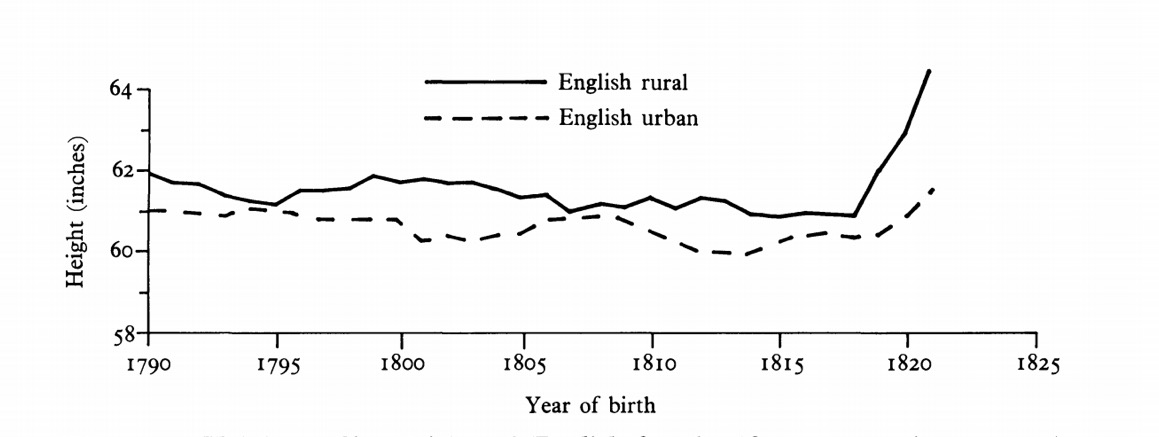
This paper examines the complex impact of the Industrial Revolution on women in eighteenth- and early nineteenth-century Britain by analyzing both academic debates and empirical evidence on women’s living and working conditions. While industrialization undeniably expanded certain employment opportunities—particularly in the textile industry—the paper argues that these apparent gains masked deeper structures of exploitation. Through a review of contrasting historiographical positions, it highlights how some scholars describe industrialization as a catalyst for women’s economic independence, whereas others emphasize declining living standards, gendered wage discrimination, and deteriorating working environments. Drawing on studies of women’s height, nutrition, factory labor conditions, and wage patterns, this paper demonstrates that industrialization often intensified pre-existing gender inequalities. Traditional forms of women’s work disappeared due to enclosure and mechanization, pushing many into low-paid factory jobs characterized by long hours, health hazards, and lack of institutional protection. Within households, unequal resource allocation further affected women’s well-being, as shown by nutritional deprivation and stagnant or declining physical indicators. Social attitudes toward working women also reinforced marginalization, framing them as morally suspect and socially inferior. Ultimately, this paper argues that although the Industrial Revolution altered the structure of female labor, it did not improve women’s social status. Instead, it reproduced and amplified forms of exploitation, revealing the limits of economic change in transforming gender hierarchies.
View pdf

This paper applies the elaborated social identity model of crowds (ESIM) to conduct a political sociological analysis of the 2020 Stuttgart youth mass incident. The study argues that this event emerged as collective action following a dynamic psychological process of “social categorization-social identification-social comparison” among youth groups, triggered by the interaction between specific social spaces and external contextual factors. Specific management practices served as the catalyst for triggering the group's perception of marginalization, causing the incident to evolve from an initial emotional reaction into an identity conflict directed at broader social structures. The paper suggests that immigrant identity should not be treated as the sole explanatory variable. The fundamental solution lies in constructing an equitable and inclusive social environment to resolve deep-seated identity crises and structural integration challenges.
View pdf
This study investigates the current situation of family education for rural left-behind children in Guangxi Zhuang Autonomous Region of China through questionnaires and interviews. The results indicate that some left-behind children are addicted to electronic devices, while their guardians fail to provide effective supervision; most left-behind children face academic difficulties and do not receive timely or effective tutoring; many guardians feel significant pressure in educating their children and have a low self-evaluation of fulfilling parenting responsibilities; and community-based family education guidance services are insufficient, with relatively few such services being provided. The current demand for family education guidance services for rural left-behind children mainly includes improving children’s self-management and learning abilities, helping guardians acquire and enhance family education skills, and linking community resources to deliver family education guidance. Therefore, the professional advantages of social work should be utilized, and methods such as case social work, group social work, community social work, social work administration, social work supervision, and social work research can be selected based on the actual situation for single or integrated interventions, so as to effectively solve the family education dilemmas of rural left-behind children.
View pdf
The digital transformation of international commercial arbitration is a major development that has significantly enhanced efficiency, accessibility and fairness, while safeguarding the autonomy of the parties involved. Today, major regions around the world have adopted unique approaches to digitalisation. Their experiences show that effective digitalisation requires the simultaneous establishment of rule certainty, technical capability and procedural fairness. China has made substantial progress in the digitalisation of international commercial arbitration through institutional practice and legislative revision, but still faces challenges relating to detailed rules, the digital divide, and data security. Moving forward, China needs to, under the principles of subsidiarity, cooperation, synergy and security, build a prudent and inclusive regulatory system by improving legislation, strengthening security frameworks, enhancing digital literacy, and leveraging the role of arbitration associations. This will support the healthy and stable development of digital international commercial arbitration in China, thereby enhancing its competitiveness and influence in the field of international dispute resolution.
View pdf
This paper examines the relevance of Immanuel Kant’s principle that humanity must be treated as an end in itself in the context of artificial intelligence (AI). Kant’s moral philosophy posits that human beings, by virtue of rationality and autonomy, possess dignity beyond price and must never be reduced to mere instruments. Yet contemporary AI practices—including data-driven profiling, algorithmic decision-making, and predictive governance—risk objectifying persons, reshaping power relations, and legitimizing control under the guise of neutrality. Such developments undermine the status of individuals as autonomous agents and threaten to erode the moral community grounded in respect for human dignity. In response, the paper argues for ethical reconstruction and the establishment of clear moral constraints on AI. These include prohibiting systems that circumvent meaningful consent or reduce persons to data commodities, while also promoting human-centered designs that enhance agency in fields such as healthcare and education. The analysis draws on both Kantian ethics and contemporary discussions of AI governance to highlight pathways for aligning technology with respect for persons. The conclusion affirms that while AI may transform the conditions of human life, it cannot alter the fundamental truth that persons are ends in themselves. Societies thus bear responsibility to ensure that technological progress consistently reflects and safeguards human dignity.
View pdf