


Volume 100
Published on December 2025Volume title: Proceeding of ICIHCS 2025 Symposium: The Dialogue Between Tradition and Innovation in Language Learning
To address the tension between virtuality and fictionality in the digital reproduction of traditional art, this paper takes the Palace Museum’s The Night Revels of Han Xizai APP and the original hand-scroll as case studies, concentrating on the divergences in textual presentation and reader interaction. Adopting a comparative analysis method, the study first dissects how the painting constructs the core carrier of fictionality through the simultaneous presentation of multiple times, spatial metaphors embodied in furniture, and the polysemy of its visual signs. It then investigates the APP’s technical strategies—spatial digital restoration, fixed symbolic interpretation, and multi-sensory rendering—and the attendant erosion of fictionality. By contrasting the two artefacts, the paper highlights differences in the reader’s imaginative engagement, the evolving relationship between audience and work, and the generation of aesthetic experience. The research concludes that the enduring appeal of The Night Revels of Han Xizai lies in its open fictionality; any act of artistic reproduction must therefore safeguard rather than dissolve this quality. A balanced synergy between technological empowerment and artistic essence can be achieved through hierarchical protection of the text layer, open design of the interactive layer, and multi-dimensional annotation of the interpretation layer. The proposed framework offers a transferable model for the digital restoration and dissemination of traditional artworks, advancing the living transmission of cultural heritage in the digital age.

 View pdf


This research utilized Karen Warren's ecofeminist viewpoint to look into Scarlett O'Hara's marital concept in the setting of Gone with the Wind, after the collapse of the American South's plantation system at the end of the Civil War and throughout the Reconstruction period; the examination showed that Scarlett's three marital selections during the course of the story encompassed the contradictory essence of patriarchal systems, using marriage as a means of survival while at the same time upholding a strong female identity based on a land - centered morality with the Tara plantation being the ecological bedrock; this seeming contradiction illustrated the built - in inconsistencies in women's emancipation during times of social turmoil when the breaking down of repressive ideas was along with a battle to entirely escape from dominant ways of thinking; the article argued that by carefully analyzing the text and delving into theory, Scarlett's attitude towards marriage stood for not just a resistance to traditional gender norms but also an attempt to build one's own identity among ecological and patriarchal difficulties thus forming an example of ecofeminist activity.
View pdf
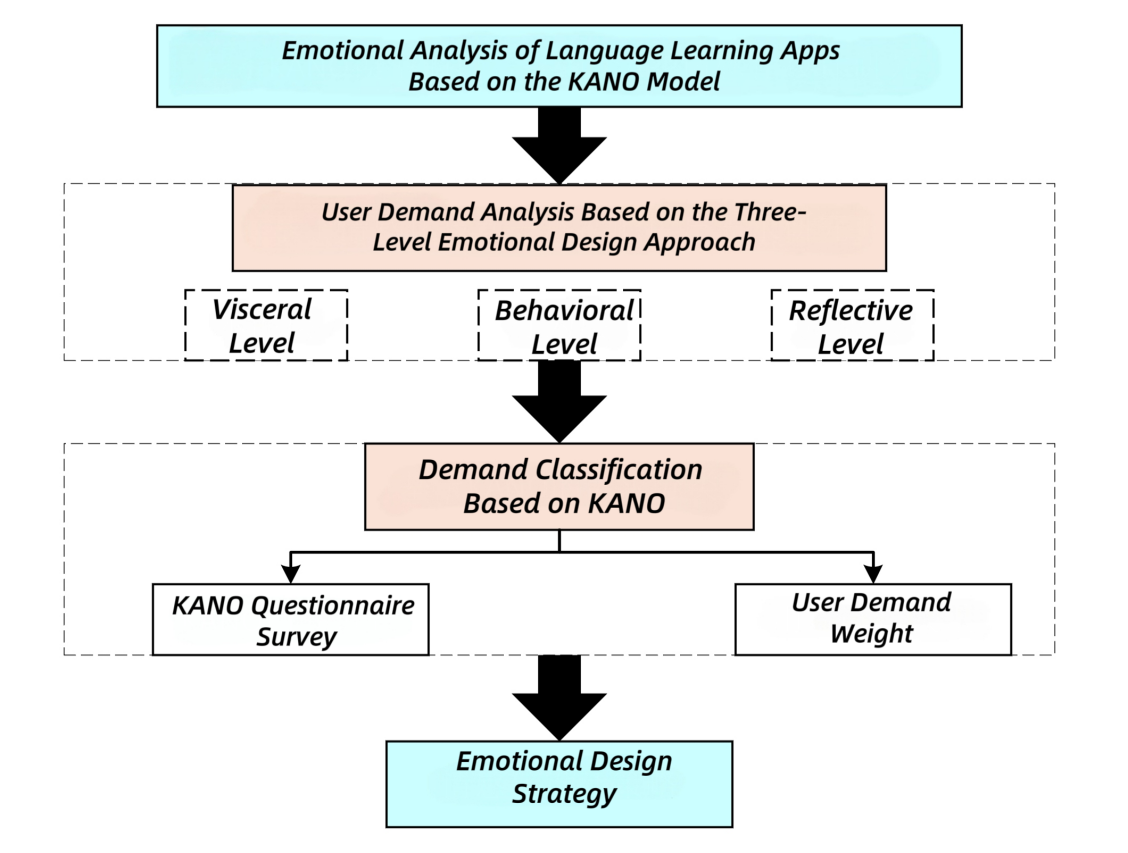
Considering issues such as homogeneity among existing language learning apps and diminished user novelty, this study integrates emotional design principles into the innovative design of language learning apps to optimize their functionality and user experience. User needs for language learning apps were summarized through surveys. Following affective design principles, these needs were categorized into visceral, behavioral, and reflective levels. The Kano model was applied to classify and identify needs across these levels, clarify user demand attributes, assess importance, and conduct preliminary screening. Based on joint analysis, innovative design strategies were proposed for language learning apps that effectively address user learning needs and foster long-term emotional value binding. The Kano model-based affective design strategy for language learning apps provides a conceptual framework for designing such applications.
View pdf
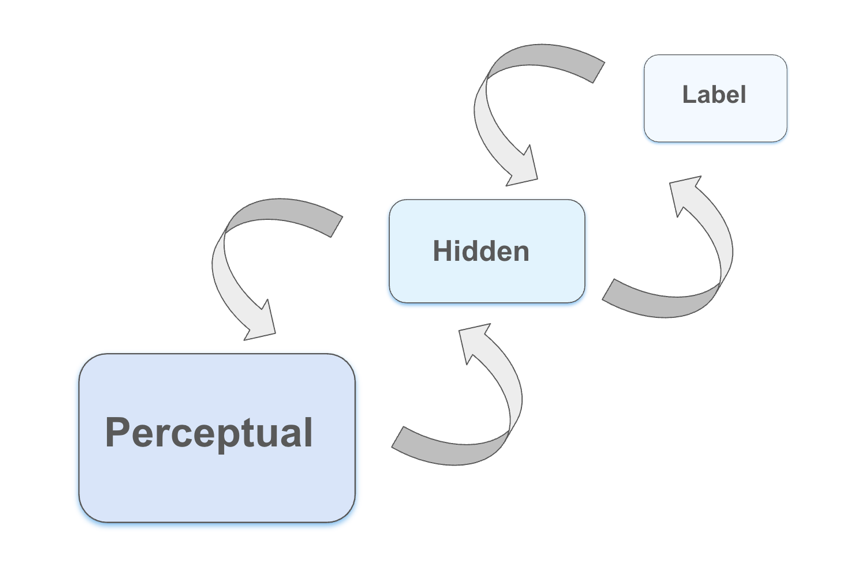
The linguistic relativity hypothesis (LR) believes that different language speakers may conceptualize the world differently. In recent decades, the debate has shifted from whether language shapes thought to when and how such modulation occurs, especially in temporal domains. The review examines how language influences thought and behavior by comparing findings from Verbal Interference Paradigms (VIP) and Event-Related Potential (ERP) studies. Some LR effects have been posited to occur via online use of language. Evidence for this comes from VIP, in which language resources are occupied by a concurrent task. This evidence has been interpreted to indicate that without access to language at the moment, speakers of different languages think the same. However, ERP evidence shows that neural differences often persist even when overt behavior shows no effect. This new evidence suggests that apparent null results may reflect methodological thresholds rather than the absence of an influence of language on thought. Together, these findings suggest the importance of distinguishing cognitive processing from behavioral outcomes when evaluating the research scope of LR.
View pdf
This essay interrogates the ethical dimensions of Martin Heidegger's concept of "Being-towards-Death" (Sein-zum-Tode) as presented in Being and Time. While Heidegger's framework offers a powerful account of achieving authentic existence through confronting one's own finitude, it is simultaneously marred by a profound ontological egoism that sidelines ethical obligations to others. This paper critically examines Heidegger's position and juxtaposes it with Emmanuel Levinas's ethics of the Other. It contends that Levinas's altruistic ethics provides a necessary counterbalance to the intensely inward-focused self-awareness in Heidegger's thought, thereby preventing the latter from devolving into an extreme egoism. The conclusion suggests that a dialectical synthesis of these perspectives can foster a more holistic equilibrium between individual authenticity and ethical responsibility.
View pdf
Both Neoclassicism and the French Revolution emerged from the ideological foundation of the Enlightenment, with the core being the absolute advocacy of "reason" and opposition to feudal autocracy and religious ignorance. This thesis mainly examines how Neoclassicism, with classical models as its carrier, visualized civic virtue to mobilize revolutionary spirit, visualized republican spirit to justify the legitimacy of the French Revolutionary regime, and explores the communication practices and social impacts of these visual symbols. The purpose is to investigate the specific political role played by Neoclassical art during the French Revolution—how it served as a powerful "visual manifesto" to proactively participate in and shape the ideology of the revolution. This thesis adopts a review approach, with research objects including Neoclassical artworks and the ideology they represent; the core method is iconological research, and the data includes visual works, academic monographs, and documents. During its development in France, Neoclassicism successfully transcended being a mere artistic style. It played a crucial role as a visual manifesto, transforming the abstract concepts of civic virtue and republican spirit into a visual language system, thereby effectively serving the construction and dissemination of revolutionary ideology.
View pdf
With the development of artificial intelligence technology, AIGC (Artificial Intelligence Generated Content) is profoundly reshaping the news communication ecosystem. AIGC news anchors such as "Jin Xiaoshuai", "Jin Xiaomei", and "Xiaoxiao Sa", which integrate voice, image, motion and semantic understanding, can achieve 24-hour non-stop broadcasting, initial emotional expression and limited interaction, and even show "human-like" characteristics, are gradually emerging in news reporting. However, news is not only a process of information transmission but also of emotional communication. Whether AIGC news anchors have the potential to establish "pseudo-social relationship" has become a matter of concern. Will the audience develop a sense of closeness like that of a "quasi-friend" due to personification design? Does this technology-driven emotional resonance affect the audience's trust and judgment of news content? This study, from the perspective of communication studies, systematically explores the mechanisms and risks of AIGC news anchors in building pseudo-social relationships, aiming to provide theoretical support and practical references for human-machine collaboration in the future of journalism.
View pdf
In a communication environment increasingly dominated by digital media, sensory communication has emerged as a crucial pathway for shaping local images and stimulating collective identity. The digital dissemination of local culture urgently requires both appeal and locality. Taking the Yunnan city image MV produced by Bilibili's "Geometric Record" account as a case study, this paper explores how intense audiovisual language and local cultural symbols construct a vivid image of Yunnan, local festival elements, and platform interaction logic, thereby promoting the construction and extension of local identity. Research reveals that this series of MV works not only creates intense sensory stimulation through rapid editing, ethnic-language songs, and spectacular color schemes, but also leverages bullet-screen interactions to generate pathways for local identity. This approach evokes cultural belonging among local audiences and emotional resonance among distant viewers. Simultaneously, this paper reflects on the risk of cultural flattening that may arise when dominated by "viral songs" tendencies and "pleasure logic." This paper argues that ethnic-style MV works, as a new form of digital ethnography, demonstrate the potential for reconstructing local culture within digital media. They also remind us of the imperative to safeguard the spiritual warmth and local depth of culture.
View pdf
This study examines British colonial behavior and its cultural impact in Shanghai and Hong Kong from 1843 to 1941. It compares the semi-autonomous Shanghailanders’ community in Shanghai with the British Crown Colony in Hong Kong, showing how different institutional structures shaped colonizers’ practices, cultural identities, and urban spaces. In Shanghai, the concession system fostered a hybrid “colonial self,” combining imperial loyalty with local belonging through the Municipal Council, chambers of commerce, clubs, and schools. In contrast, Hong Kong’s centralized colonial administration emphasized bureaucratic control, cultural segregation, and a singular “imperial loyalty.” The analysis highlights how daily practices of colonizers influenced urban cultural formation under divergent colonial regimes, providing insight into the micro-mechanisms of colonial identity and local adaptation.
View pdf
Adult second language acquisition (SLA) has been a focus of debate, particularly regarding the balance between biological constraints and environmental influences. Traditional perspectives, such as the Critical Period Hypothesis, emphasize age limitations, while recent studies highlight how social, institutional, and contextual factors can compensate for these challenges. This paper explores three major environmental dimensions—family and community contexts, workplace demands and opportunities, and educational institutions—and analyzes how these settings shape adults’ language learning outcomes. Family and community provide emotional and motivational support, workplaces offer authentic but sometimes restrictive learning contexts, and institutions deliver structured instruction and policy-level assistance. It can either reinforce or hinder language development depending on alignment and accessibility. Drawing on both theoretical insight and empirical evidence, this essay demonstrates that adult SLA is not invariably deficient. However, it is profoundly malleable to the environments in which it unfolds. The findings emphasize that effective adult SLA requires a holistic, ecological approach that integrates home, workplace, and institutional efforts to create equitable and sustainable learning opportunities.
View pdf