


Volume 12 Issue 8
Published on December 2025Using cultural space theory as the analytical framework, this study explores the digital communication path of sports intangible cultural heritage (ICH) in the Jiangsu section of the Grand Canal. Under the strategic context of the “14th Five-Year Plan” for cultural development and the construction of the Grand Canal Cultural Belt, sports ICH faces challenges such as the dissolution of its transmission space and the inefficiency of its dissemination. Digital technology offers new opportunities for the living inheritance of intangible heritage. By constructing a three-dimensional analytical framework encompassing the “physical–social–symbolic” dimensions, and integrating technologies such as GIS, VR, and AI, this research digitally reconstructs and simulates the dissemination of sports ICH in regions including Yangzhou, Wuxi, and Changzhou. The study proposes three digital communication paths: (1) at the physical level, to build a perceptible cultural corridor for canal sports; (2) at the behavioral level, to create an experiential “body theater”; and (3) at the symbolic level, to cultivate participatory digital cultural communities. The coordinated interaction of these three dimensions promotes the transformation of ICH from “representation” to “symbiosis,” achieving the recontextualization of techniques and the reproduction of value. This provides both theoretical and practical references for the living transmission of sports ICH in the digital era.

 View pdf


This paper examines the living inheritance of Tujia oral tradition, drawing on fieldwork conducted from March 2024 to February 2025 in the Enshi Tujia and Miao Autonomous Prefecture. It integrates the folkloric theory of "intensive fieldwork" with practices of digital cultural heritage preservation. By constructing a three-dimensional analytical framework of "oral historical materials – inheriting subjects – cultural space," the study identifies practical challenges faced by this tradition amid urbanization, including the shrinking of original contexts, intergenerational discontinuity, and inadequate adaptation of digital technologies. A corresponding preservation model is proposed, emphasizing the coordinated advancement of "digital archiving of historical materials, stratified cultivation of inheritors, and reconstruction of spatial ecology." The research finds that digital technologies must be deeply embedded within the cultural ecosystem of "people – context – content" to effectively facilitate the creative transformation of Tujia oral tradition. This study aims to provide operable theoretical support and practical solutions for safeguarding the intangible cultural heritage of non-written ethnic groups in the Wuling Mountain area.
View pdf
This study examines the inheritance dilemma of Longquan celadon in the Internet era, integrating sociological and anthropological perspectives. From a sociological lens, this study utilize Bourdieu’s cultural capital theory (1986) to analyze how celadon’s craftsmanship, rituals, and market value form a symbolic resource that shapes inheritors’ occupational identity and social status. The digital disruption of the market has fragmented this cultural capital’s reproduction, leading to intergenerational conflicts in occupational values. This study also employs Geertz’s concept of local knowledge (1983) and thick description to unpack how celadon craftsmanship, as a locally embedded knowledge system, is negotiated by several local artisans. The intergenerational gap in digital adoption, including the older inheritors limited use of short videos versus younger artisans’ digital entrepreneurship, reveals a struggle over cultural authenticity and innovation, reflecting the dynamic reconstruction of local knowledge in the digital age. This research advanced both sociology and anthropological by showing how digitalization reshapes the social field of traditional craftsmanship and the cultural meaning of intangible heritage, highlighting the interplay between global technologies and local cultural practices.
View pdf
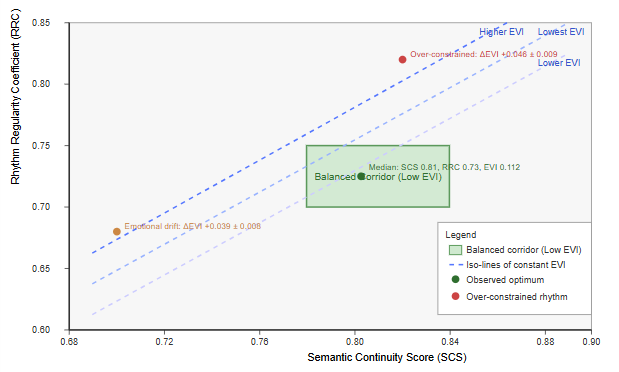
This research has developed a data-driven creative computing framework that combines micro-iterations of character prototypes with quantitative control of rhythm density, thereby optimizing the narrative creativity and overall productivity of pipeline short play creation. The system builds an iterative feedback mechanism by transforming qualitative narrative components into computational representations. By linking creative intentions, audience responses and platform performance, the adaptive evolution of character prototypes enhances the authenticity of emotions, and the adjustment of rhythm density maintains the coherence and compactness of the narrative rhythm. This model integrates artistic intelligence and algorithmic intelligence, demonstrating how creative adaptability can coexist with platform scalability and operational accuracy.
View pdf
A lot of Confucius Institutes have been built globally since 2004. Many believe these institutes could serve as bridges to enhance mutual understanding between the East and the West and dispel misjudgments. Yet in practice, it also brought some controversies, criticisms or even frustrations in the output of China’s soft power. In 2014, the University of Chicago and the Pennsylvania State University in the United States terminated the cooperation with Confucius Institutes. Confucius Institutes have gradually sparked concern and apprehension among American academics and politicians. The number of Confucius Institutes in the United States has declined sharply since 2017, with many Confucius Institutes and Classrooms being forced to close due to various political and public pressure. Moreover, this wave of closures shows no sign of reversing at present. The increase or decrease in the number of Confucius Institutes in the United States reflects the changing dynamics of closeness and distance during contact process of two countries. This paper intends to clarify the reasons behind the shift, analyses how cultural awareness and cultural misunderstandings arise during cross-cultural interactions, thereby impeding cultural exchange. It seeks to propose solutions that may prompt both parties to rethink and revise its mode of operation.
View pdf
Based on an anthropological and biological perspective, this analysis argues that humans are driven to create and consume art because it fulfills deep-seated biological and psychological needs. Drawing on Victor Turner’s concept of liminality, it posits that art provides a transitional space that breaks social norms and fosters communitas, much like ritualistic hazing. Furthermore, neurological evidence demonstrates that art activates brain regions associated with pleasure and reward, suggesting it hijacks primal neural pathways to evoke intense emotional responses.
View pdf

This article analyzes the protection and development strategy of Chinese historic towns and their public spaces. Within this context, the paper then focuses on the importance of protecting the public spaces of historic towns. Taking the Anju Historic Town as an example, we analyze its historic and cultural heritage and characteristics and collected the opinions of local residents and tourists on the town's public space through field research. In this paper, we explore the methods of protection and development of Anju’s public space, and conclude that it is best to enhance the quality of public space through landscape creation and by working on developing unique tourism features. Through combining this with Anju's cultural heritage, tourists will be able to better experience the cultural charm of the historic town in-depth.
View pdf
Zhang Yimou’s Raise the Red Lantern is adapted from Su Tong’s novel Wives and Concubines. By employing literature, film and media, both works construct their narrative through object-based metaphors, yielding markedly different artistic effects. This paper employs case analysis and comparative research to examine the core objects in both works, discussing the specific pathways through which these objects are transformed from textual’ symbols into cinematic ones. By contrasting the differences in how these symbols manifest across media, it reveals their underlying cultural connotations and thematic expressions. Based on the emblematic objects, including red lanterns, flutes, and natural landscapes, the study argues that the addition, deletion, and reconstruction of objects alongside their cultural motivations are crucial for understanding literary-cinematic interaction.
View pdf
The Datun contract documents provide empirical evidence for investigating the actual state of tunian (military-agricultural) land transactions in central Guizhou during the Qing dynasty. After the Wei-suo garrisons in Datun Village, Puding County, were merged into prefectural and county administrations, the village formed a “one place, three jurisdictions” governance pattern, rooted in the coexistence of multiple land tax categories, including tunian, ketian (official stipend fields), and qiutian (autumn fields). Although land remained nominally classified as “tun” or “ke,” and the documents continued to use the term ding (top), tunian had effectively been privatized, unifying rights to the land’s base and surface, and enabling free circulation. Tunian primarily served as an indicator of tax grade, and transaction prices were lower than those of ketian due to “high tax, low price.” Examining tunian transactions provides empirical insights into land tenure structures and socio-economic changes in central Guizhou from the Ming to Qing dynasties.
View pdf
The early machine theory of Marx and Engels re-examines the dialectical role of machinery in capitalist production, elucidates its revolutionary potential, and lays the theoretical groundwork for the systematization of Marx’s later reflections on machinery. First, it reveals how machinery is transformed from a means of labor into an alienated instrument. Under the domination of capital’s logic, machinery becomes a value-extracting apparatus that absorbs living labor; through the factory system, it restructures the spatiotemporal order of labor, reducing workers from subjects of labor to mere living components of the machine. Second, it analyzes the internal contradictions embedded in machinery. Although machinery, as the engine of productive-force revolutions, intensifies exploitation by raising the rate of relative surplus value, it simultaneously displaces living labor, thereby shrinking variable capital and lowering the rate of profit. At a deeper level, it exacerbates the antagonistic conflict between the socialization of production and private ownership, planting the seeds of a revolutionary self-negation. Finally, it explores the practical pathways through which machinery’s revolutionary potential may be realized. Only by transforming ownership—turning machinery from capital’s property into the common means of production of associated workers—can technological alienation be overcome and labor ultimately be elevated from a mere means of subsistence to “life’s prime need.” The core concern of the early machine theory of Marx and Engels lies in exposing the logic of domination inherent in capitalist relations of production rather than critiquing machinery itself. This critical perspective is foundational for decoding the paradoxes of artificial intelligence in the digital-intelligent era.
View pdf