


Volume 248
Published on December 2025Volume title: Proceedings of ICFTBA 2025 Symposium: Data-Driven Decision Making in Business and Economics
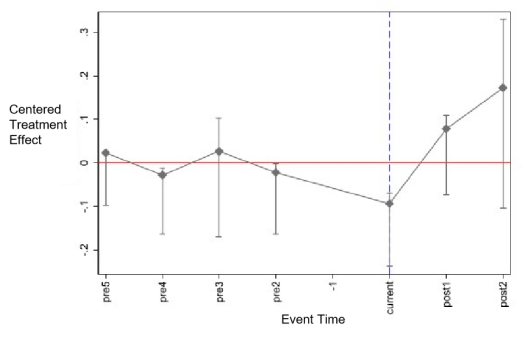
Taking the entry into force of the Regional Comprehensive Economic Partnership (RCEP) in 2022 as a quasi-natural experiment, this paper systematically analyzes the impact and mechanisms of RCEP on China’s exports of high-tech products, based on panel data from 2011 to 2023 and employing the difference-in-differences (DID) method. The empirical results indicate that the implementation of RCEP has significantly boosted China’s exports of high-tech products to RCEP member countries, and this finding remains robust after a series of robustness checks. Furthermore, a mechanism analysis using the International Property Rights Index (IPRI) reveals that RCEP has significantly promoted the growth of China’s high-tech exports by enhancing the level of property rights protection. Heterogeneity analysis shows that industries such as life sciences and computer-integrated manufacturing have benefited significantly, while sectors like optoelectronics, aerospace, and telecommunications have been less affected. In addition, ICT-related exports demonstrate a notable synergistic driving effect on the overall high-tech industry exports. Based on the findings, it is recommended to provide targeted support for high-tech sectors that benefit the most, while also optimizing policies to address weaknesses in underperforming areas. Efforts should be strengthened in promoting ICT-integrated innovation and improving property rights protection to comprehensively enhance the international competitiveness of China’s high-tech industries.

 View pdf


College students' entrepreneurship is an important component of the national innovative ecosystem. However, it still suffers from “market failure” due to a lack of financial support. The high-quality development of college students' entrepreneurship is very sensitive to a well-crafted policy and governance environment. In order to address these challenges, this paper introduces the idea of the public welfare attribute of college students' entrepreneurship and analyzes the contradiction and integration between its market-orientation and public welfare-orientation.Based on the life-cycle theory of entrepreneurial activity, this paper proposes a “trinity” financial support system for college students' entrepreneurship in a public welfare-orientation. The financial support system proposal has three aspects. The first is campus financial support that is steered by talent cultivation strategy. The second is governmental financial support that is motivated and inspired by a strategic vision for public welfare. The final one is financial support that is in harmony with corporate social responsibility. The current study enhances academic connotations and interpretations regarding college students' entrepreneurship development and offers valuable views for making relevant policies and strategies in making incentives for college students.
View pdf
This paper investigates the structural barriers to women's labor force participation (LFP) in East Asia, focusing on China, Japan, and South Korea. While each of these countries has achieved remarkable economic development, traditional gender norms rooted in Confucianism and high-pressure economic systems continue to hinder women’s full participation in the workforce. Using gender role socialization theory and structural inequality theory as the analytical framework, the study draws on labor statistics, national policy documents, and prior academic research to conduct a comparative analysis of female LFP. The findings reveal three key challenges: the persistence of gendered family roles (“widowed parenting” and the M-shaped employment curve), workplace discrimination (wage gaps, career interruptions, and low representation in senior management), and inadequate family support policies. Although all three countries have introduced reforms, many remain symbolic and insufficient. Notably, the study finds variation in how these issues manifest: China’s urban-rural divide, Japan’s entrenched non-regular employment for women, and South Korea’s severe wage gap and rigid family-first ideology. The paper concludes that effective policy must move beyond token measures and address deep-rooted cultural and institutional structures to ensure gender equality. Only by dismantling these systemic barriers can East Asian societies fully realize women’s economic potential..
View pdf