Volume 221

Published on October 2025

Volume title: Proceedings of ICFTBA 2025 Symposium: Global Trends in Green Financial Innovation and Technology

ISBN:978-1-80590-391-8(Print) / 978-1-80590-392-5(Online)
Conference date: 20 November 2025
Editor:Lukáš Vartiak, Sun Huaping
Research Article
Published on 24 September 2025 DOI: 10.54254/2754-1169/2025.BJ27232
Yunqi Fang
DOI: 10.54254/2754-1169/2025.BJ27232

Green finance has steadily grown to be a significant factor influencing the modification of corporate capital structures in recent years as investors have become more aware of ESG and global climate rules have gotten more stringent. However, how exactly green financing affects corporate capital structures remains a key issue of concern in both academia and practice. Motivated by this, this paper aims to explore the impact of green financing on corporate capital structures. Combining literature review and case analysis, this paper selects Apple Inc. and ExxonMobil as typical cases and reveals, through comparative analysis, the differentiated impacts of green financing on different types of enterprises. The results show that green financing has a debt redistribution effect: it can extend debt maturities, reduce financing costs, and decrease reliance on equity financing. At the equity structure level, green financing attracts long-term investors by enhancing a company’s “green reputation,” thereby stabilizing shareholder structures and lowering the cost of equity capital. In terms of capital costs, the “greenium” effect of green bonds and the accumulation of a long-term green reputation significantly optimize the weighted average cost of capital (WACC). In sum, green financing not only improves the stability of corporate capital structures but also enhances corporate value and sustainable development capacity.

Show more
View pdf
Fang,Y. (2025). Research on the Impact of Green Financing on Corporate Capital Structure. Advances in Economics, Management and Political Sciences,221,1-6.
Export citation
Research Article
Published on 24 September 2025 DOI: 10.54254/2754-1169/2025.BJ27237
Yongsen Zhuang
DOI: 10.54254/2754-1169/2025.BJ27237

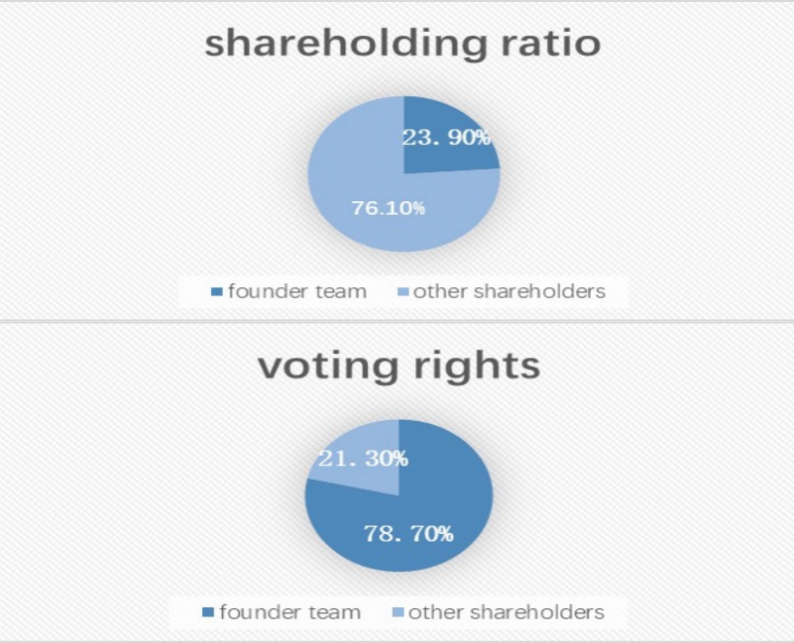
The financial fraud case of Luckin Coffee stands as one of the most iconic fraud incidents in the history of Chinese companies listing in the United States. Its complete journey from swiftly achieving listing, experiencing delisting, to ultimately relisting has exposed three core loopholes: governance imbalance, information distortion, and accounting manipulation. The power struggle between the founding team and capital parties rendered the internal control mechanism ineffective, creating room for such practices as inflating orders and forging transactions. In terms of information disclosure, it evaded supervision by fabricating supply chain transactions through related parties, exaggerating store revenue data, and taking advantage of the information asymmetry of the U.S. stock market regarding emerging business formats. For accounting manipulation, it exploited the accounting loopholes in the complex franchise model to include false revenues in financial statements. It has also sounded an alarm for the global capital market. This article focuses on governance failures, inaccurate disclosures and fraudulent means, analyzing the institutional incentives and specific operational methods behind its fraudulent behavior. At the same time, it interprets the core path of self-rescue through governance reconstruction and technology application, thereby providing practical references for enterprises in financial compliance management and market supervision.

Show more
View pdf
Zhuang,Y. (2025). Exploration and Analysis of Luckin Coffee's Financial Fraud and Self-rescue Path. Advances in Economics, Management and Political Sciences,221,7-14.
Export citation
Research Article
Published on 22 October 2025 DOI: 10.54254/2754-1169/2025.BJ28129
Shuo Han
DOI: 10.54254/2754-1169/2025.BJ28129

Financial markets have undergone continuous transformation, with artificial intelligence (AI) marking a pivotal stage in their evolution. While AI-driven trading enhances efficiency by processing vast data at high speed, it also introduces systemic vulnerabilities through herding behavior. Unlike traditional human herding driven by psychology, algorithmic herding stems from model convergence, information amplification, recursive feedback loops, cross-market spillovers, and digital sentiment cascades. Historical episodes—including the 2010 Flash Crash, the 2015 Chinese stock market collapse, the 2021 GameStop surge, and the 2022 cryptocurrency crash—illustrate how minor shocks can escalate into large-scale market disruptions. These cases reveal that AI not only codifies new forms of irrationality but also accelerates contagion across markets. The implications extend beyond volatility, threatening liquidity, investor trust, and systemic stability. To mitigate risks, strategies such as technological diversification, anti-herding algorithm design, circuit breakers, regulatory technology, and international coordination are proposed. Ultimately, herding in AI-driven markets cannot be eliminated but must be managed through intentional design and governance. This paper contributes to the interdisciplinary understanding of AI herding by integrating insights from behavioral finance, complexity science, and regulatory studies, aiming to balance efficiency with stability in an era of machine-dominated finance.

Show more
View pdf
Han,S. (2025). Research on Herding in AI Trading. Advances in Economics, Management and Political Sciences,221,15-27.
Export citation
Research Article
Published on 22 October 2025 DOI: 10.54254/2754-1169/2025.BJ28045
Yurun Wang
DOI: 10.54254/2754-1169/2025.BJ28045

For the stable development of small and medium-sized enterprises, the credit issue has always been an important constraint. With the steady development of financial technology, big data technology has been applied in the credit field for small and medium-sized enterprises, significantly enhancing the efficiency of bank credit approval and risk identification capabilities. However, the existence of data governance issues such as data silos, privacy leaks, and unclear ownership has restricted the full release of the application potential of big data technology. This paper systematically examines the current application status of big data technology in the credit of small and medium-sized enterprises, identifies key governance bottlenecks such as data acquisition, data quality, security and compliance, and proposes a feasible path for the collaborative governance of system and technology. By constructing a four-dimensional collaborative model of "regulatory framework - data standards - technical tools - enterprise collaboration", further suggestions are provided for promoting the full empowerment of financial technology in credit support for small and medium-sized enterprises.

Show more
View pdf
Wang,Y. (2025). FinTech-Enabled Small and Medium-sized Enterprises Credit: Data Governance Bottlenecks in Big Data Applications and Institutional-Technological Synergy Solutions. Advances in Economics, Management and Political Sciences,221,28-34.
Export citation
Research Article
Published on 22 October 2025 DOI: 10.54254/2754-1169/2025.BJ28147
Xinjie Li
DOI: 10.54254/2754-1169/2025.BJ28147

The increasing life expectancy of humans poses significant longevity risk to life insurance companies and pension providers. This paper provides a systematic review of longevity bonds as a financial instrument for hedging longevity risk, examines stochastic mortality models, with a focus on the Lee-Carter model, and discusses the classification, operational mechanisms and pricing methods of longevity bonds. The study compares continuous and triggered longevity bonds, highlights their respective applicability to different risk profiles, and evaluates pricing methods such as the risk-neutral pricing method and the Wang transformation method. The study concludes that longevity bonds effectively transfer longevity risk faced by life insurers and pension funds, with continuous bonds suited for gradual risk hedging over extended periods and triggered bonds designed to protect against extreme longevity events. The Wang transformation method proves superior for long-term pricing due to its robustness, outperforming risk-neutral and instantaneous Sharpe ratio approaches in longevity bond valuation.

Show more
View pdf
Li,X. (2025). Hedging Longevity Risk with Longevity Bonds: Modeling, Design, and Valuation. Advances in Economics, Management and Political Sciences,221,35-40.
Export citation
Research Article
Published on 22 October 2025 DOI: 10.54254/2754-1169/2025.BJ28148
Jiayi Zhou
DOI: 10.54254/2754-1169/2025.BJ28148

This study develops a comprehensive framework for evaluating volatility trading strategies in crypto-proxy option markets under realistic market conditions. A high-fidelity backtesting environment is constructed that explicitly incorporates commissions, bid–ask spreads, slippage, and liquidity limits, ensuring that reported performance metrics reflect true implementable outcomes rather than theoretical gains. The methodological progression begins with a simple slope-based trading rule and extends to generalized machine learning classifiers and reinforcement learning agents. Empirical results demonstrate that the baseline heuristic and universal machine learning models quickly lose profitability once realistic frictions are introduced, highlighting the fragility of universal alpha in frictional markets. By contrast, sector-specific approaches uncover conditional profitability that remains robust under practical constraints. In particular, XGBoost yields positive returns in Bitcoin spot exchange-traded funds, while reinforcement learning agents generate consistent gains in mining and semiconductor sectors. These results collectively support a conditional efficiency paradigm, whereby market inefficiencies are not broad-based but localized, context-dependent, and exploitable only through specialized, adaptive modeling techniques. The framework thus contributes to both academic research and practical trading strategy design, offering insights into how algorithmic trading in emerging digital asset markets must evolve to remain viable in the presence of persistent market frictions.

Show more
View pdf
Zhou,J. (2025). Uncovering Conditional Alpha: A Divide-and-Conquer Approach to Volatility Trading in Crypto-Proxy Markets. Advances in Economics, Management and Political Sciences,221,41-47.
Export citation
Research Article
Published on 22 October 2025 DOI: 10.54254/2754-1169/2025.BJ28066
Yao Xiao
DOI: 10.54254/2754-1169/2025.BJ28066

With the development of financial technology, the competition pattern of the global financial market is changing rapidly. This article critically overview of the passive reform of traditional banks due to its human- based operation mode and limitations in efficiency-risk management.At the same time, Fintech has accelerated the reform of the financial industry by de-intermediation, information transparency and efficiency optimization, and spawned the business model of automated institutions.This paper also discusses the subsequent regulatory risks and challenges, and discusses the follow-up research direction in the field of financial technology. Emerging financial technology companies take advantage of their agility and technological superiority to enter the market of traditional financial intermediaries and provide more convenient and personalized financial services, intensifying market competition. Through a systematic literature review and comparative analysis with traditional intermediaries, this paper discusses the impact and reconstruction of financial technology on the traditional market. This paper believes that while today 's financial technology has brought about innovative structural changes and positive economic development, it is also accompanied by the pressure of lagging risk monitoring and supervision.

Show more
View pdf
Xiao,Y. (2025). Changes of Market Structure under the Shock of Financial Technology: Comparative Analysis Based on Traditional Financial Agents. Advances in Economics, Management and Political Sciences,221,48-54.
Export citation
Research Article
Published on 22 October 2025 DOI: 10.54254/2754-1169/2025.BJ28281
Yizhou Li
DOI: 10.54254/2754-1169/2025.BJ28281

As global sustainable development strategies continue to evolve, green financial instruments have become a key means of directing capital towards environmental projects. In contrast to traditional financial tools, innovative mechanisms like green bonds and green investment funds serve dual purposes, both advancing environmental goals and fulfilling fiscal functions. This enables them to fill institutional gaps in traditional financial markets, particularly in the area of ecological governance. This paper investigates the performance of green financial instruments in sustainable investment and their role in driving the green transition. Despite rapid growth, debates persist over their effectiveness, especially around “greenium,” risk diversification, and policy limits. By combining literature review and case analysis, it aims to clarify the issues in assessing green finance performance. The results show that green financial instruments are effective in mobilizing private capital, enhancing environmental transparency, and lowering climate risks. However, they also face challenges like insufficient standardization, market fragmentation, as well as difficulties in assessing environmental impact. Despite these issues, green finance supports sustainable investment, with its effectiveness relying on a solid policy framework, clear definitions, and accurate assessment methods.

Show more
View pdf
Li,Y. (2025). The Performance of Green Financial Instruments and Their Supporting Role in Sustainable Investment. Advances in Economics, Management and Political Sciences,221,55-61.
Export citation
Research Article
Published on 22 October 2025 DOI: 10.54254/2754-1169/2025.BJ28172
Yuchen Cui
DOI: 10.54254/2754-1169/2025.BJ28172

The United States and China are widely recognized as the two largest economies in the world, and their securities markets together account for a significant portion of global financial activity. As such, studying these markets provides valuable insights into the structure, efficiency, and development of international finance. This paper aims to examine and compare the key differences between the Chinese and U.S. securities markets, with particular attention given to their institutional frameworks, regulatory mechanisms, and trading practices. By introducing several representative cases from both markets, it seeks to illustrate how each system operates in practice and to highlight the strengths and weaknesses inherent in their mechanisms. The research indicates that while the U.S. market has generally established stronger investor protection systems, including stricter disclosure rules and more mature legal enforcement, determining which country possesses the superior trading mechanism remains a complex issue. Both markets demonstrate unique advantages and limitations shaped by their economic environments, government policies, and levels of market maturity. Ultimately, analyzing these mechanisms is crucial not only for understanding the distinctive paths of development taken by the U.S. and Chinese markets but also for guiding investors, regulators, and policymakers toward making more informed decisions in the future.

Show more
View pdf
Cui,Y. (2025). The Differences between the Chinese and US Security Market. Advances in Economics, Management and Political Sciences,221,62-67.
Export citation
Research Article
Published on 22 October 2025 DOI: 10.54254/2754-1169/2025.BJ28112
Siyang Deng
DOI: 10.54254/2754-1169/2025.BJ28112

This study investigates the financing challenges faced by small and medium-sized enterprises (SMEs) in Vietnam and evaluates the role of supply chain finance (SCF) as a potential solution. Motivated by Vietnam’s rapid economic growth and its distinctive development model, this study anchors its analysis within the broader context of emerging market financing. Understanding how financial mechanisms interact with Vietnam’s evolving business environment provides both academic and policy-relevant insights. Drawing on Financial Constraint Theory and Technology-Enabled Finance Models, the research explores how SCF can improve SME liquidity, particularly for firms lacking collateral or a formal credit history. Through macroeconomic data analysis, institutional review and cross-country comparisons with Mexico and South Korea, this study finds that SCF adoption in Vietnam remains limited. To unlock SCF’s potential, the paper recommends expanding credit guarantee schemes, promoting electronic invoicing, modernizing legal frameworks for receivables and incentivizing green financing models. The findings highlight the urgent need for targeted reforms of SCF for SMEs in Vietnam.

Show more
View pdf
Deng,S. (2025). Supply Chain Finance for Small and Medium-sized Enterprises in Vietnam: Current State and Future Pathways. Advances in Economics, Management and Political Sciences,221,68-75.
Export citation